
Industrial desk setup ideas
Six elements that build a raw, rugged, hard-edged workspace from steel, reclaimed wood, concrete, and exposed Edison light — functional, honest, and built to last 20 years.
Industrial is the most honest aesthetic on this site. Where boho hides structure under layers of texture and dark academia softens everything with warmth, industrial puts the bones of the workspace on display: raw steel frames, exposed bolts, visible pipe fittings, reclaimed timber with its saw marks intact. An industrial desk setup features raw rugged materials and sleek functionality — nothing pretends to be something it isn't.
The aesthetic comes from early-twentieth-century factories and warehouses, where furniture was built to survive decades of heavy use and form followed function absolutely. Translated to a modern workspace, that means a minimal color palette of neutrals like black and dark grey, materials chosen for durability over decoration, and a deliberate celebration of the mechanical: the bolt, the bracket, the caster, and the weld shown rather than hidden. It's the only cool-toned, hard-edged aesthetic in this series — the deliberate opposite of everything warm and soft.
Industrial is the aesthetic where the structure is the decoration. The exposed bolt isn't a flaw you tolerate — it's the entire point.
This guide covers the six elements that consistently build a raw, functional industrial workspace, the five principles that keep it from sliding into either cold sterility or theatrical steampunk, the gear worth buying, and the mistakes that quietly undermine the look. Industrial desks often combine metal and wood materials, and the best of them are built to last 15 to 20 years — this is an aesthetic that rewards buying once and buying well.
What actually makes a desk industrial
The six elements below look different individually, but they work because they share these five underlying rules. Skip one and the whole composition slides toward either cold sterility or theatrical steampunk — both adjacent to industrial, but neither it.
- 01
Raw materials, honest finishes
Industrial is built on authentic materials shown as they are. Raw materials include solid wood tabletops paired with steel or pipe-style legs — real timber, real metal, honest finishes rather than imitations. Reclaimed wood with visible grain and nail holes, blackened steel, raw iron, concrete: each material wears its nature openly. Avoid anything pretending to be something else — laminate printed to look like wood, plastic molded to look like metal. The honesty of the material is the aesthetic.
- 02
Function over decoration, always
Every element in an industrial setup should justify itself functionally first. Functional decor should be emphasized — the bolt holds the frame, the caster moves the cart, the bracket supports the shelf. Where other aesthetics add objects purely for looks, industrial earns its visual interest from things that work. Select a desk that enhances ergonomics and aesthetics together; incorporate storage solutions to reduce clutter; choose pieces whose form genuinely follows their function. The result reads as purposeful, not decorated.
- 03
A cool, restrained palette
A minimal color palette for industrial design includes neutrals like black and dark grey — charcoal, gunmetal, raw steel, concrete gray. The reclaimed wood provides the only real warmth, and a single Edison-amber glow adds the one note of warm light. Avoid neon colors in favor of soft natural lighting to maintain a moody atmosphere. The restraint is deliberate: industrial is cool where every other aesthetic on this site is warm, and that cool palette is the fastest signal of the style.
- 04
Expose the structure
The defining move of industrial is showing what other styles hide. Exposed hardware and visible brickwork enhance the industrial aesthetic — the bolts on the desk frame, the pipe flanges on the shelf brackets, the casters on the cart, the welds on the steel. Where minimalist conceals every fastener, industrial celebrates them as design features. Incorporating metal piping as legs creates an edgy aesthetic precisely because the mechanical structure is on display rather than tucked away.
- 05
Warm it up, just enough
Pure industrial can read cold and sterile — the failure mode of the aesthetic. The fix is small, deliberate notes of warmth that don't break the cool palette. Warm lighting such as Edison bulbs enhances the vintage glow of these setups beautifully. A desk pad can add warmth and organization to cold steel surfaces. Incorporating plants creates a more inviting workspace, and foliage balances the industrial aesthetic — a single architectural succulent or snake plant softens the hard edges without turning the space into a jungle. The skill is restraint: enough warmth to invite, not so much that the industrial honesty disappears.
Six elements that build an industrial desk
Each element contributes a specific quality to the aesthetic. Layer four of them and you've got industrial. Layer all six and the corner becomes the kind of raw, functional workspace that looks like it could survive a century of heavy use.
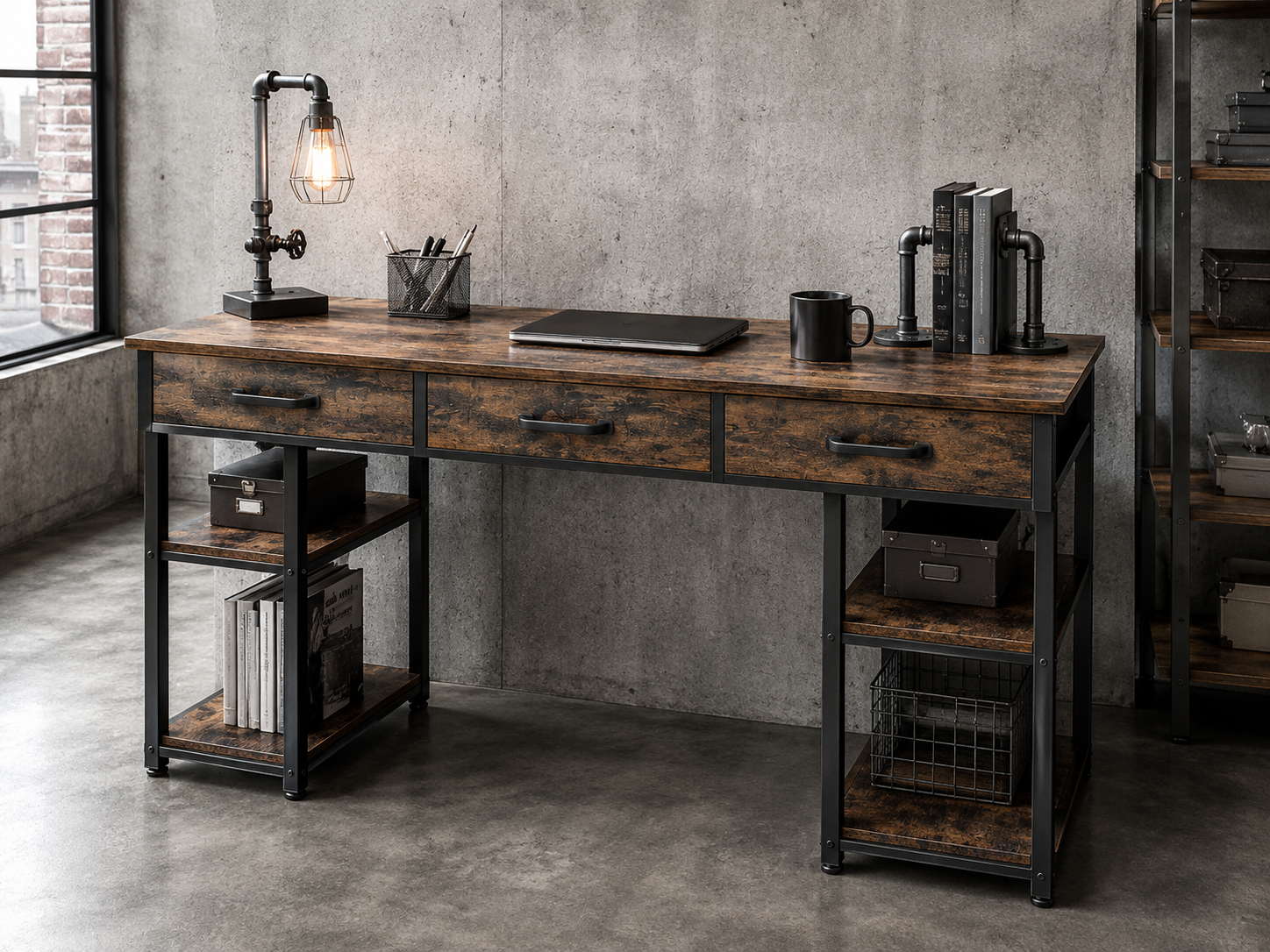
Raw Metal & Steel Frame
The steel frame is the structural heart of an industrial desk. A pipe-frame or angle-iron base in blackened steel or raw gunmetal sets the entire tone — and incorporating metal piping as legs creates an edgy aesthetic that leans fully into warehouse vibes. Look for powder-coated steel, raw iron, or bolt-together pipe systems with the hardware left visible. Modular pipe-leg systems rank highest for home use because they're DIY-friendly and expandable. The frame should read as engineered and honest: exposed bolts, visible welds, no decorative covers hiding the structure.
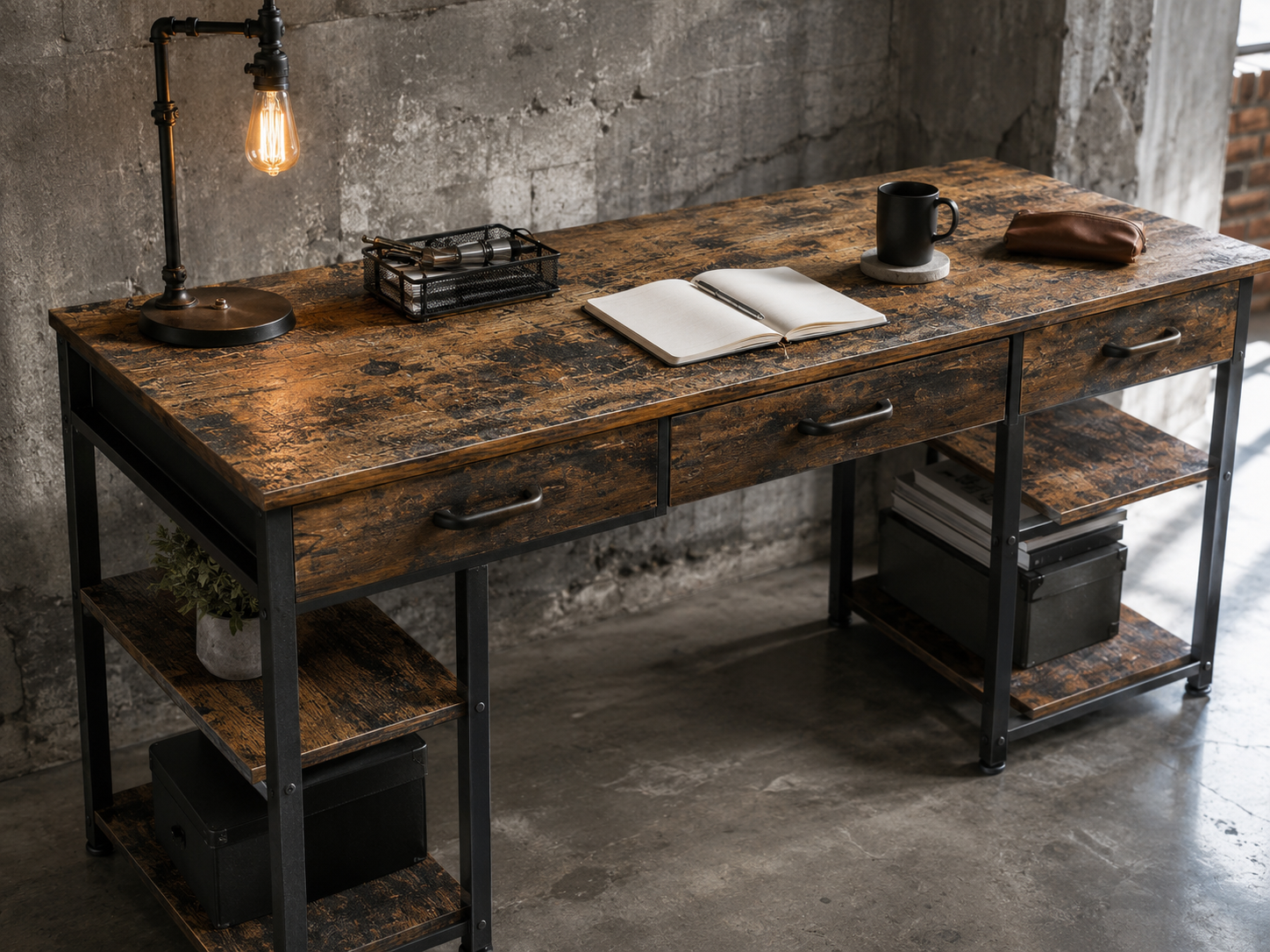
Reclaimed Wood Surfaces
The wood top is where industrial earns its warmth. Choosing reclaimed wood or thick butcher block desktops paired with powder-coated steel frames creates the defining industrial look — the warmth of aged wood against cold steel is aesthetically pleasing in a way that works across nearly any space. Using reclaimed timber for desks promotes sustainability, and the visible grain, knots, and nail holes add character no factory finish can replicate. Look for dark, weathered, salvaged timber with its history intact. Wood needs periodic oiling to protect against moisture, but it ages gracefully where laminate just chips.
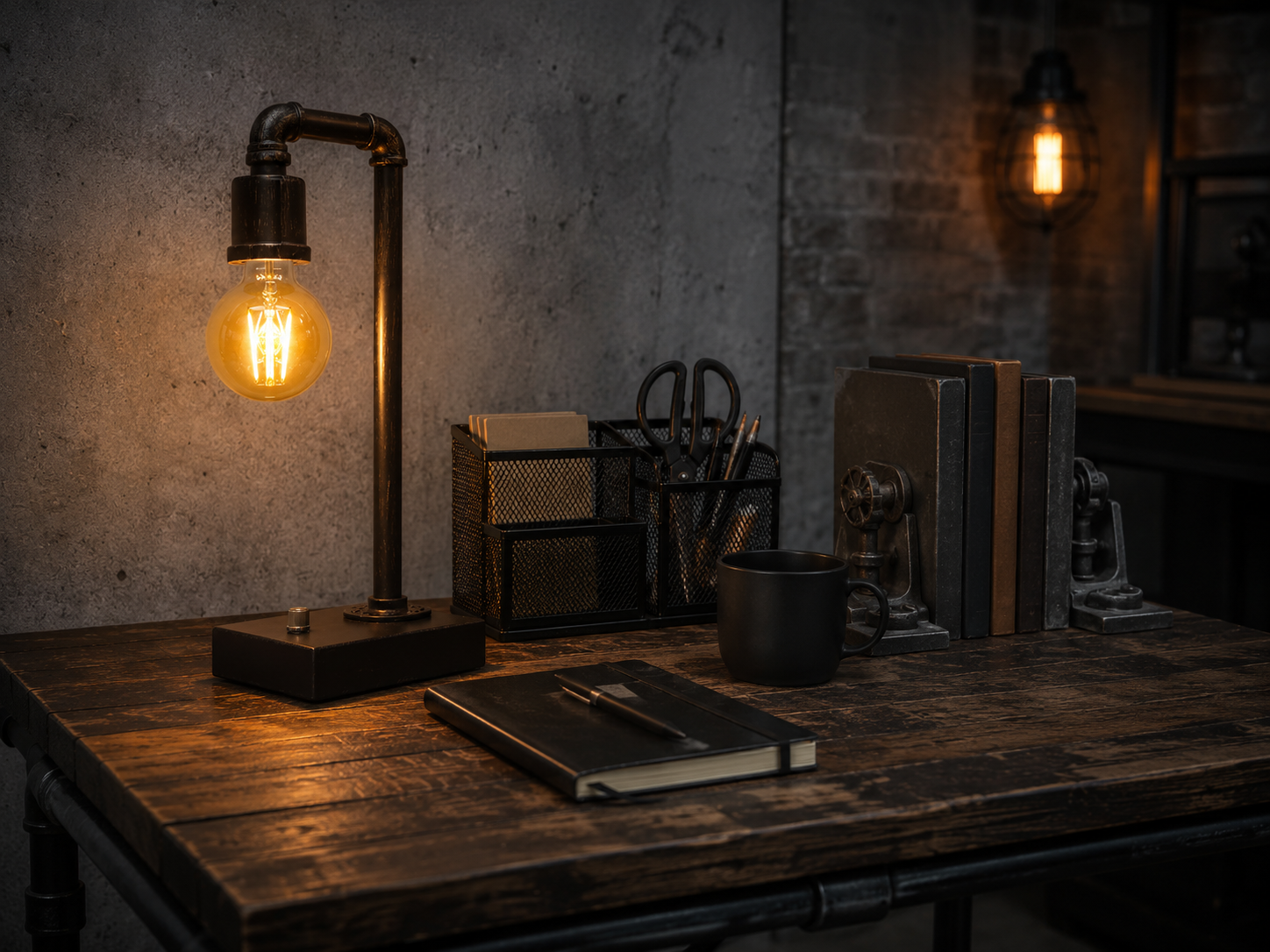
Exposed Edison Lighting
Lighting is where industrial gets its soul. Warm lighting such as Edison bulbs enhances the vintage glow of these setups beautifully — an exposed-filament bulb in a metal-bodied lamp or a caged sconce throws warm amber light against the cool steel and concrete, the single deliberate note of warmth in a cool palette. Ambient lighting enhances the visual character of a workspace, while adjustable desk lamps can target specific work areas. Natural light improves desk aesthetics and productivity too, so position the desk near a window where possible — poor lighting can cause eyestrain and headaches, and a screen bar lamp reduces glare from monitors during long sessions.
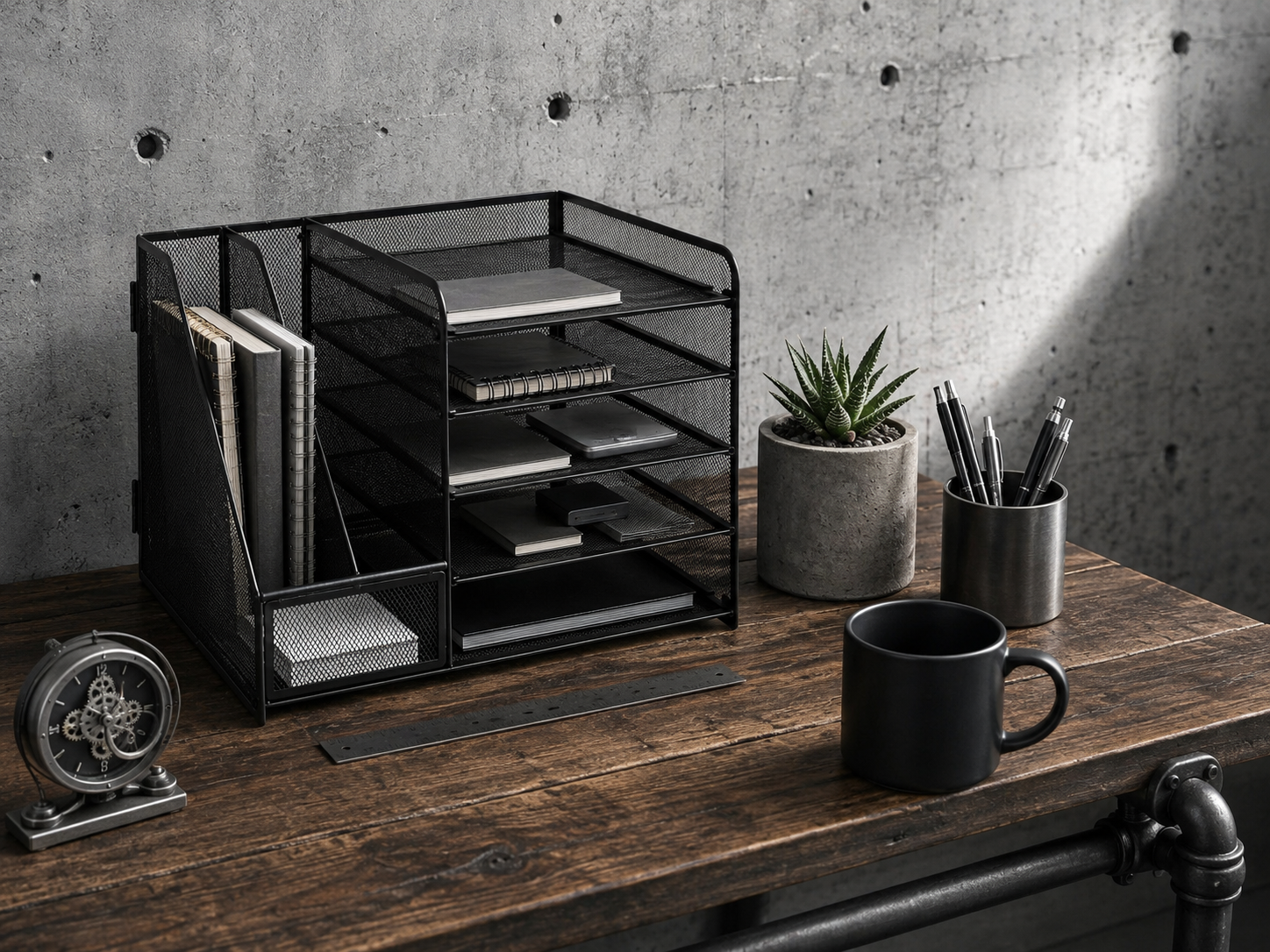
Concrete & Industrial Materials
Concrete is the material that pushes a setup from “metal furniture” into full industrial. Combining concrete and steel creates a striking visual contrast that resists scratches and heat while delivering exceptional durability. Incorporating concrete or terracotta accessories adds contrast throughout the setting — a concrete pen pot, a concrete coaster, a cast planter. The materials here are deliberately cool and raw: concrete, blackened steel, gunmetal, wire mesh. Every concrete piece is one-of-a-kind, and the cool tactile weight grounds the whole workspace in the warehouse aesthetic.
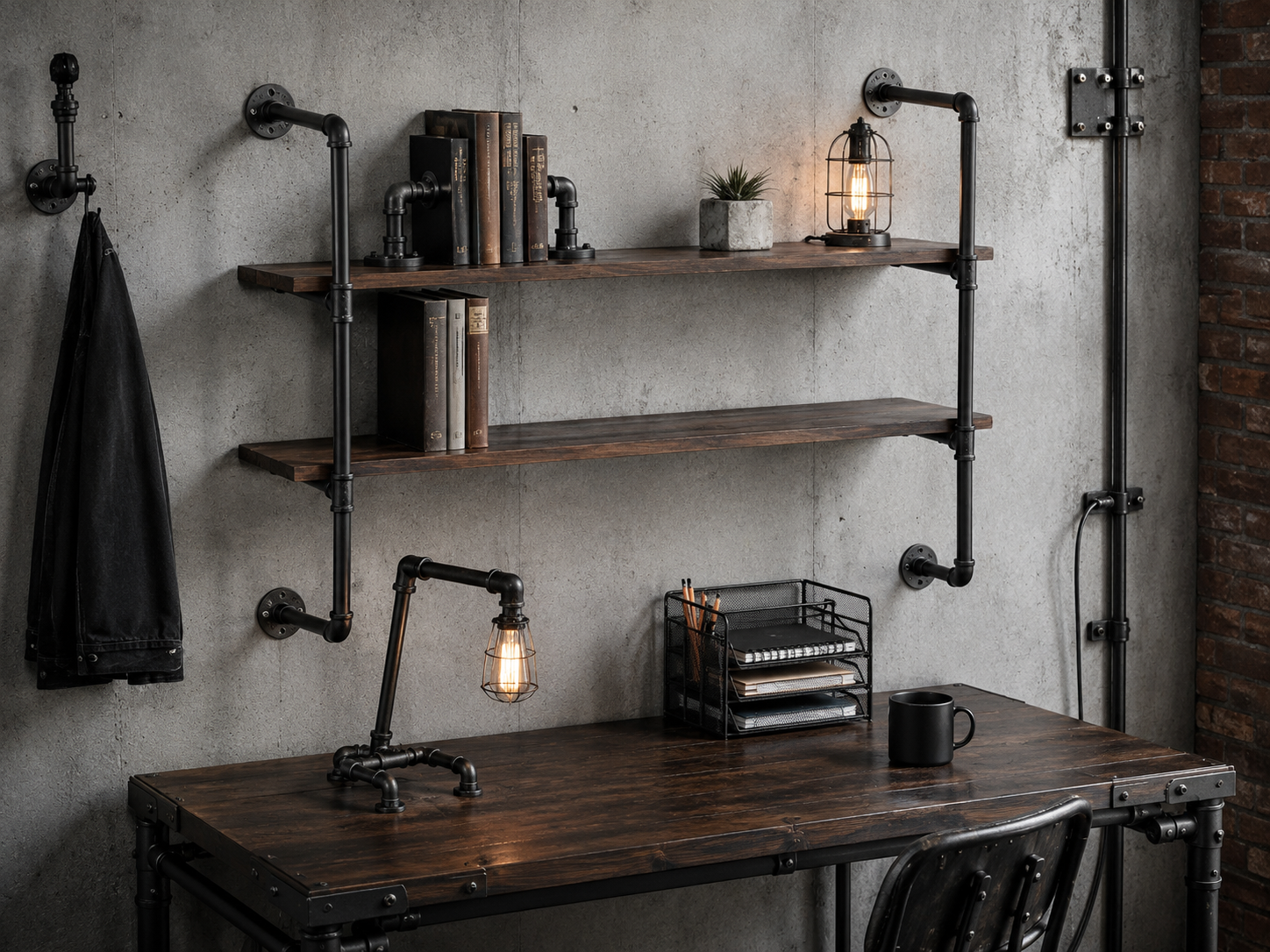
Pipe & Hardware Details
The exposed hardware is what makes industrial unmistakably itself. Exposed hardware and visible brickwork enhance the industrial aesthetic — black iron pipe brackets, visible flanges, bolts, and fittings shown as deliberate design features. Vertical space can be optimized with wall-mounted shelves using iron brackets, and exposed shelving can showcase decor and provide storage at once. Where every other aesthetic hides its fasteners, industrial celebrates them: the pipe joint, the bolt head, the bracket flange all become visual interest precisely because they're honest mechanical function on display.
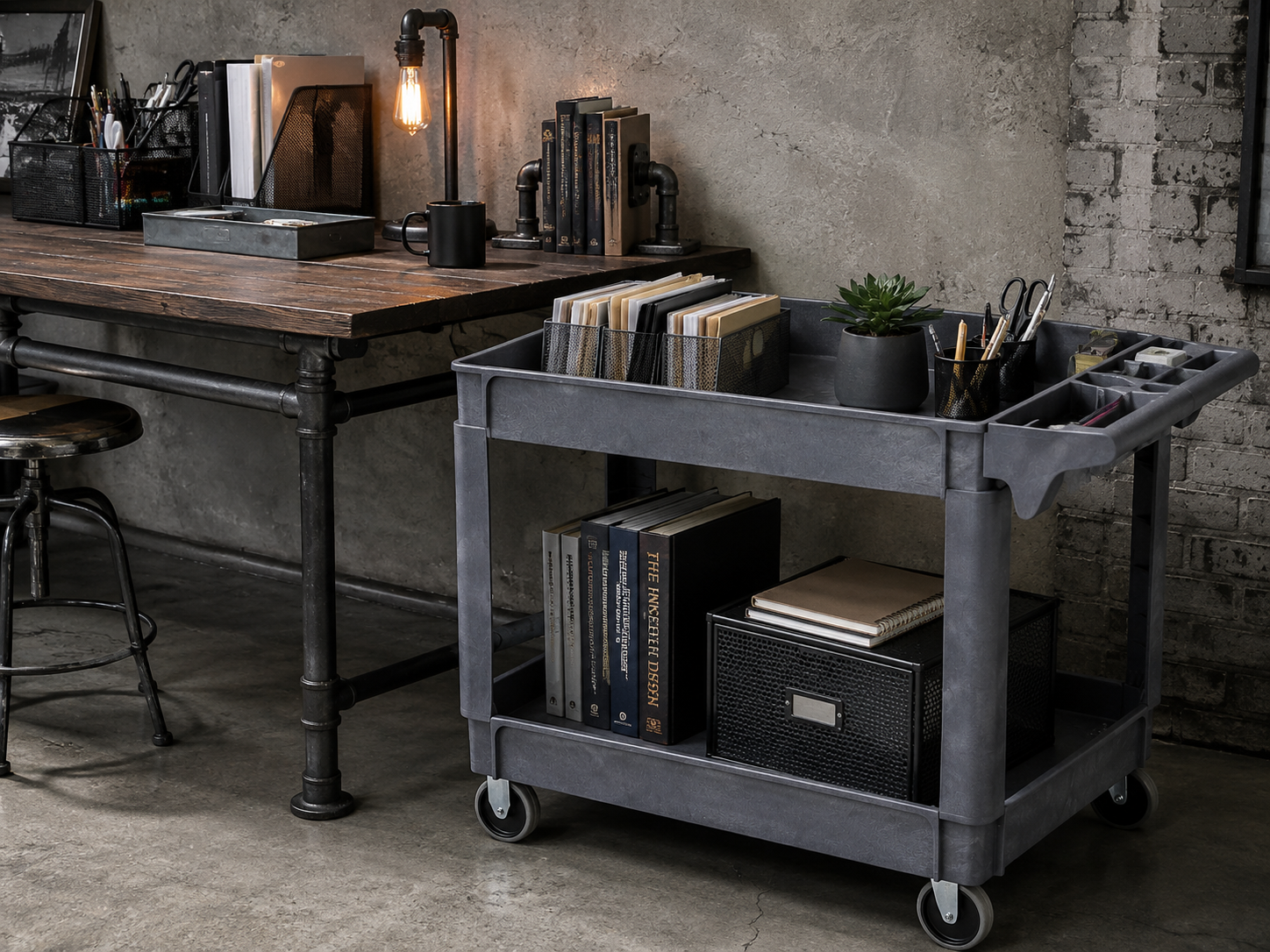
Utilitarian Storage & Organization
Storage in an industrial setup is honest and on-brand — nothing hidden behind decorative fronts. Use wire mesh organizers and weathered-metal filing systems for industrial storage that stays true to the aesthetic. A metal rolling cart with visible casters, exposed-shelf steel systems, and mesh desktop organizers keep everything functional and accessible. Incorporate storage solutions to reduce clutter on the desk surface; the goal is “organized workshop” rather than “concealed and tidy.” Clean hidden wires are essential too — route cables through the frame so the only visible structure is the structure you want seen.
Six pieces of gear that build an industrial desk
Industrial rewards buying once and buying well — quality steel and reclaimed wood last 15 to 20 years. These six pieces anchor the aesthetic across the frame, lighting, storage, and the cool industrial palette, and each one earns its place through function as much as looks.
Some links in this section are affiliate links. If you buy through one of them, we may earn a small commission at no extra cost to you. We only recommend gear we'd use ourselves.
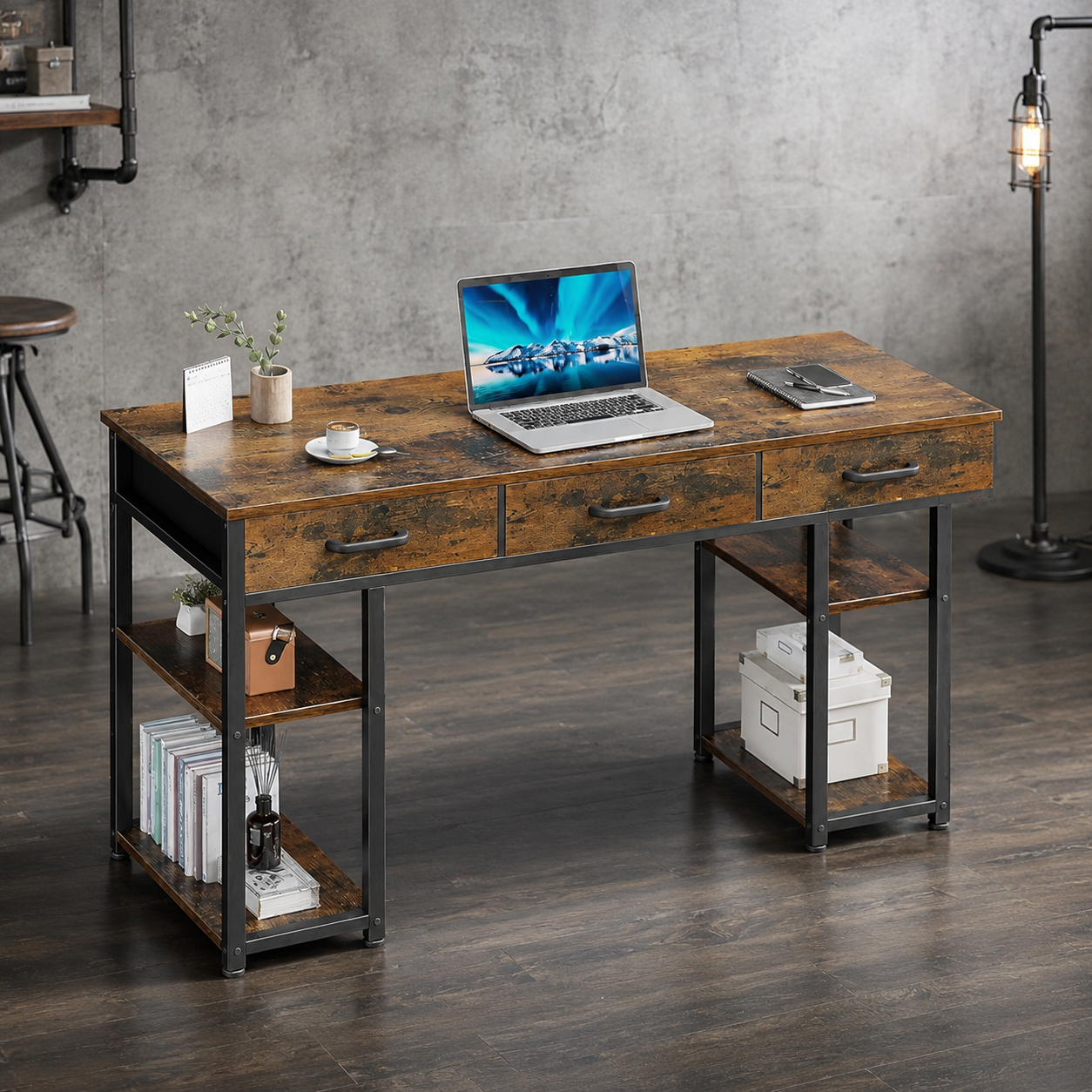
ODK Industrial Steel-Frame Computer Desk
The accessible entry point to the industrial look. A dark wood-grain top on a black steel frame delivers the wood-and-metal contrast that defines the aesthetic, at a price far below a reclaimed-timber custom build. The compact footprint suits small rooms and apartments where a full warehouse slab won't fit. It's not genuine reclaimed timber, but the proportions and color are right — and it gives you a working industrial base to layer the rest of the elements onto.
- Dark wood-grain top on a black steel frame
- Compact size for small rooms and apartments
- Simple bolt-together assembly
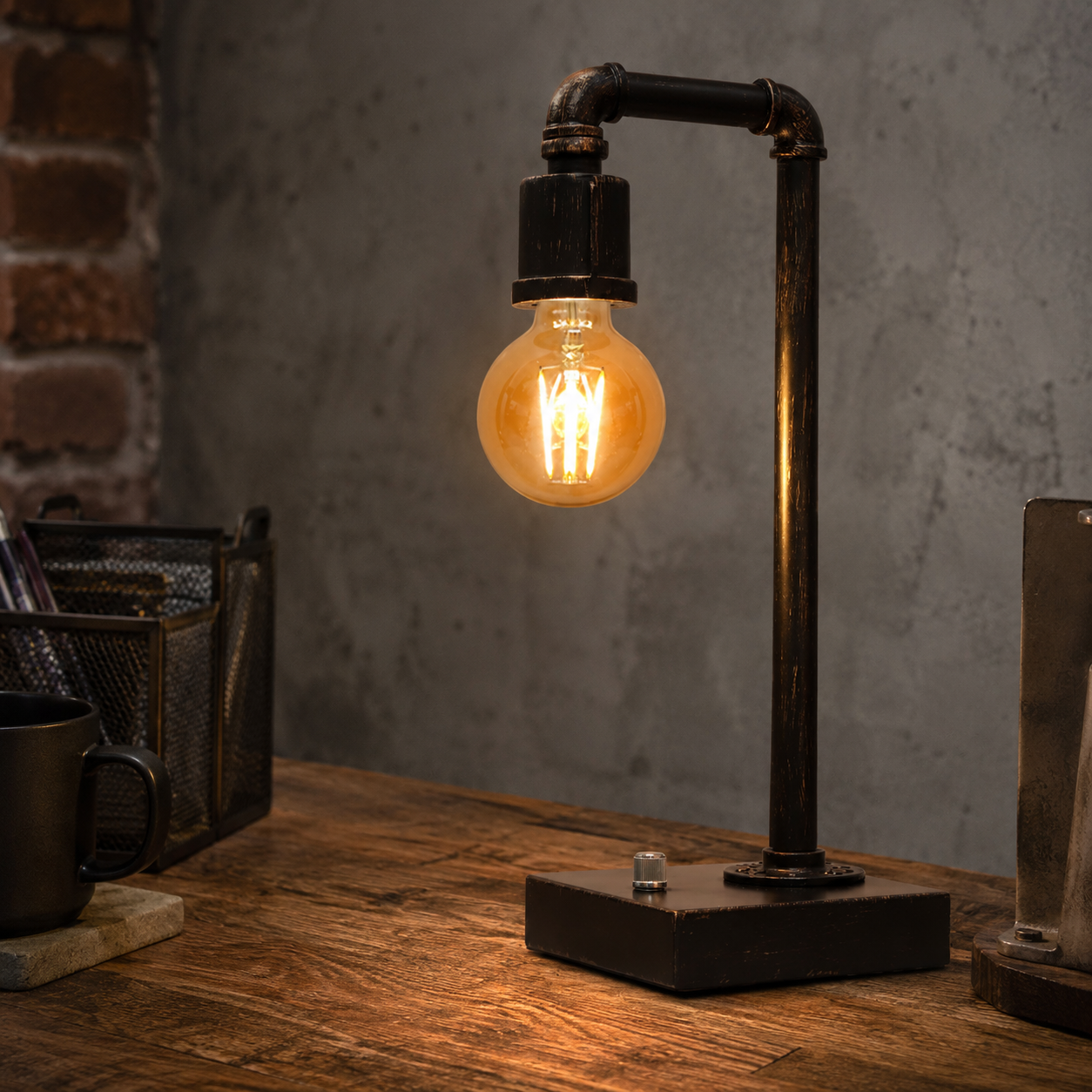
Industrial Edison Table Lamp with USB
The single most defining lighting upgrade for an industrial desk. An exposed Edison bulb in a metal steampunk-style pipe body throws the warm amber glow that contrasts so well against cool steel and concrete. This one adds a built-in USB charging port and a dimmable switch — function alongside form, exactly as industrial demands. Fit it with a warm Edison filament bulb and place it at the back corner to anchor the lighting. Warm lighting like this enhances the vintage glow that makes the aesthetic feel inviting rather than cold.
- Exposed Edison bulb in a metal pipe-style body
- Built-in USB charging port, dimmable
- Farmhouse-industrial styling that suits any setup
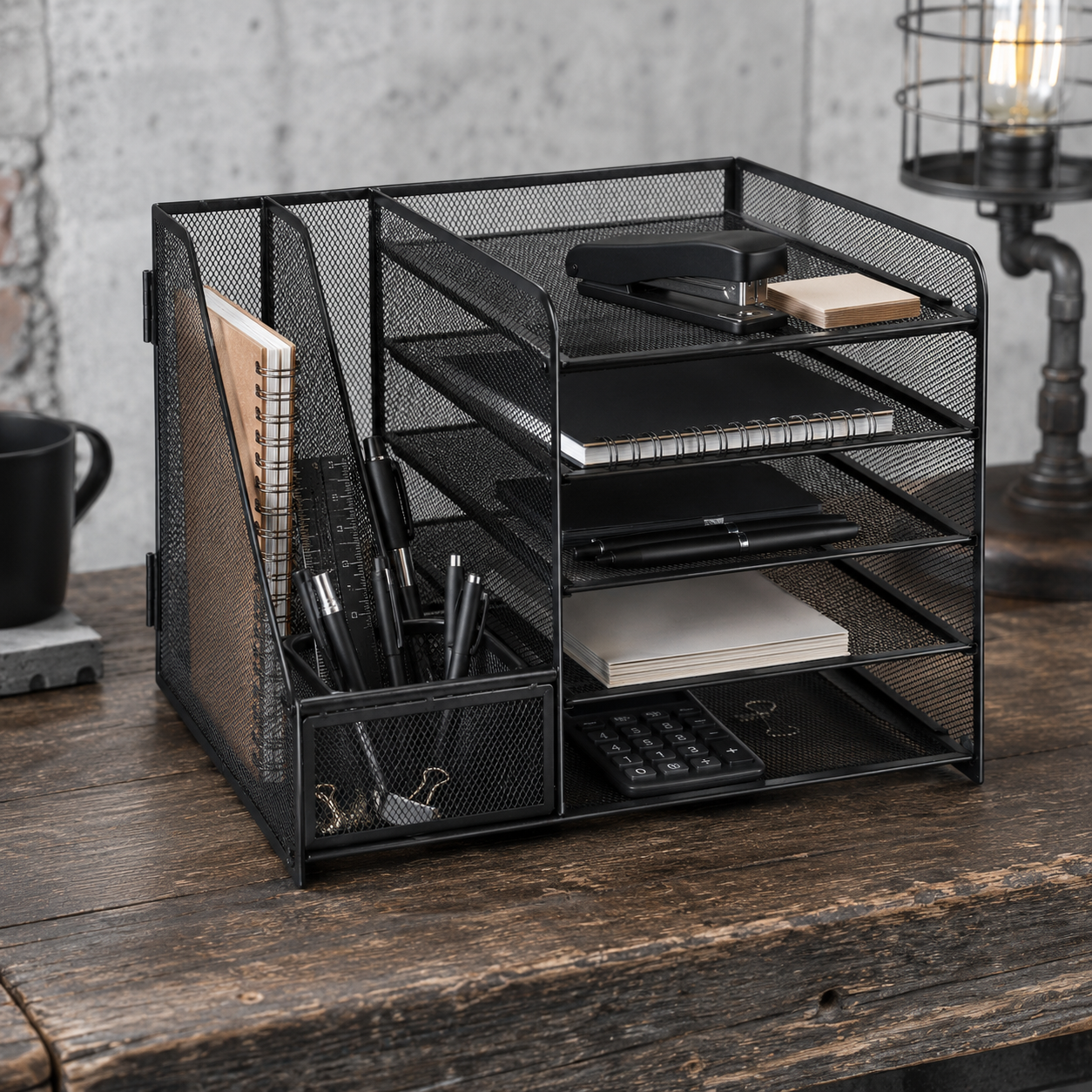
Marbrasse Metal Mesh Desk Organizer
Wire mesh organizers are the on-brand industrial storage solution, and this one combines a file holder with pen and supply compartments in black metal mesh. Most desk organizers are plastic — which fights an industrial setup. This one solves the function while reinforcing the look, keeping documents, pens, and tools accessible and visible right where you reach. The black mesh sits cleanly against both steel frames and reclaimed wood tops, and it's the kind of utilitarian piece industrial is built around.
- Black metal mesh with file holder and compartments
- Holds documents, pens, and desktop supplies
- On-brand industrial material and finish
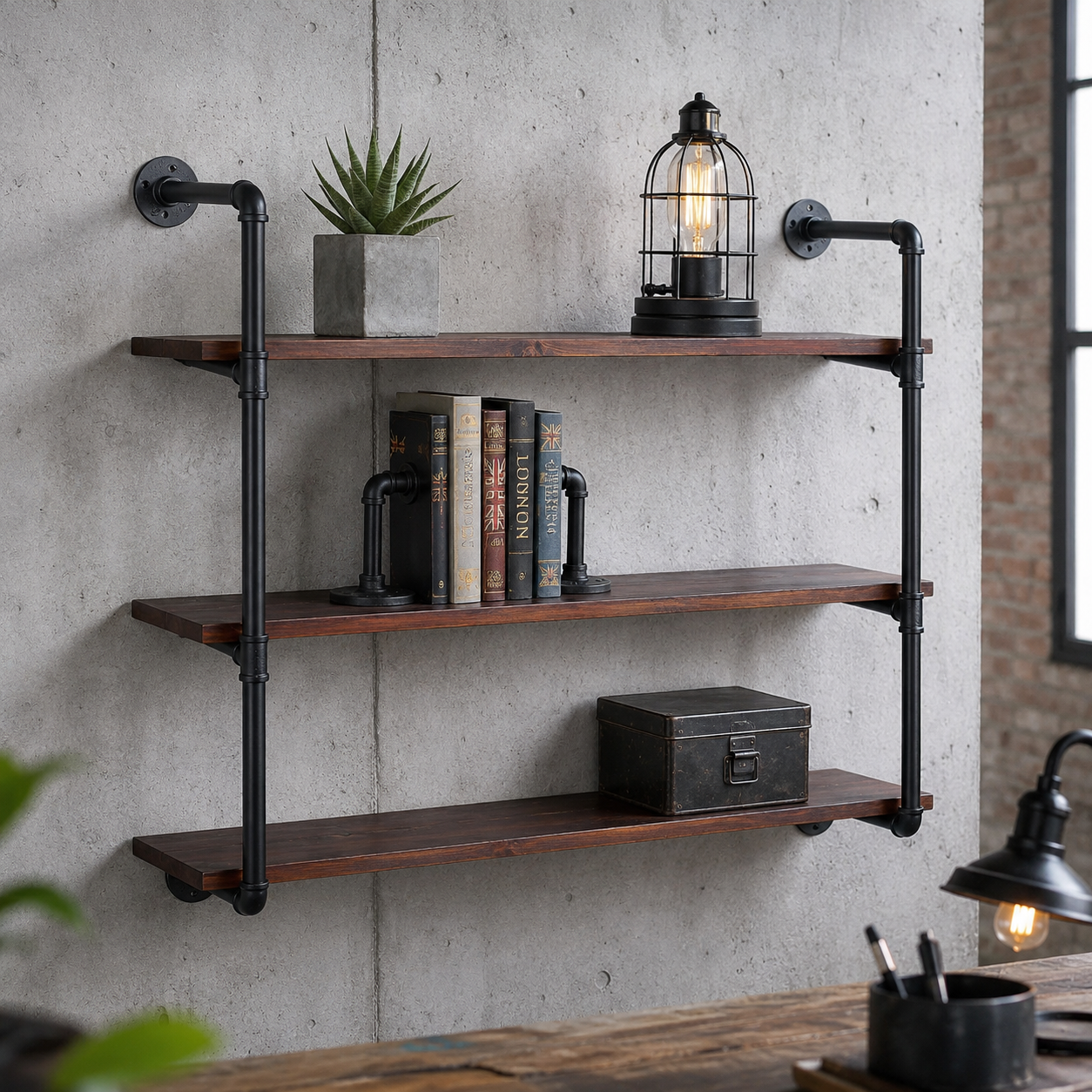
Industrial Pipe Wall Shelves with Wood Planks
Vertical space optimized with wall-mounted shelves using iron brackets — the most efficient way to add both storage and aesthetic at once. These pipe shelves pair dark wood planks with black iron pipe brackets, putting the exposed-hardware look front and center while giving you a place for books, plants, and decor above the desk. Exposed shelving can showcase decor and provide storage simultaneously, and the visible pipe fittings reinforce the mechanical honesty the whole aesthetic depends on.
- Dark wood planks on black iron pipe brackets
- Wall-mounted to optimize vertical space
- Exposed pipe fittings as a design feature
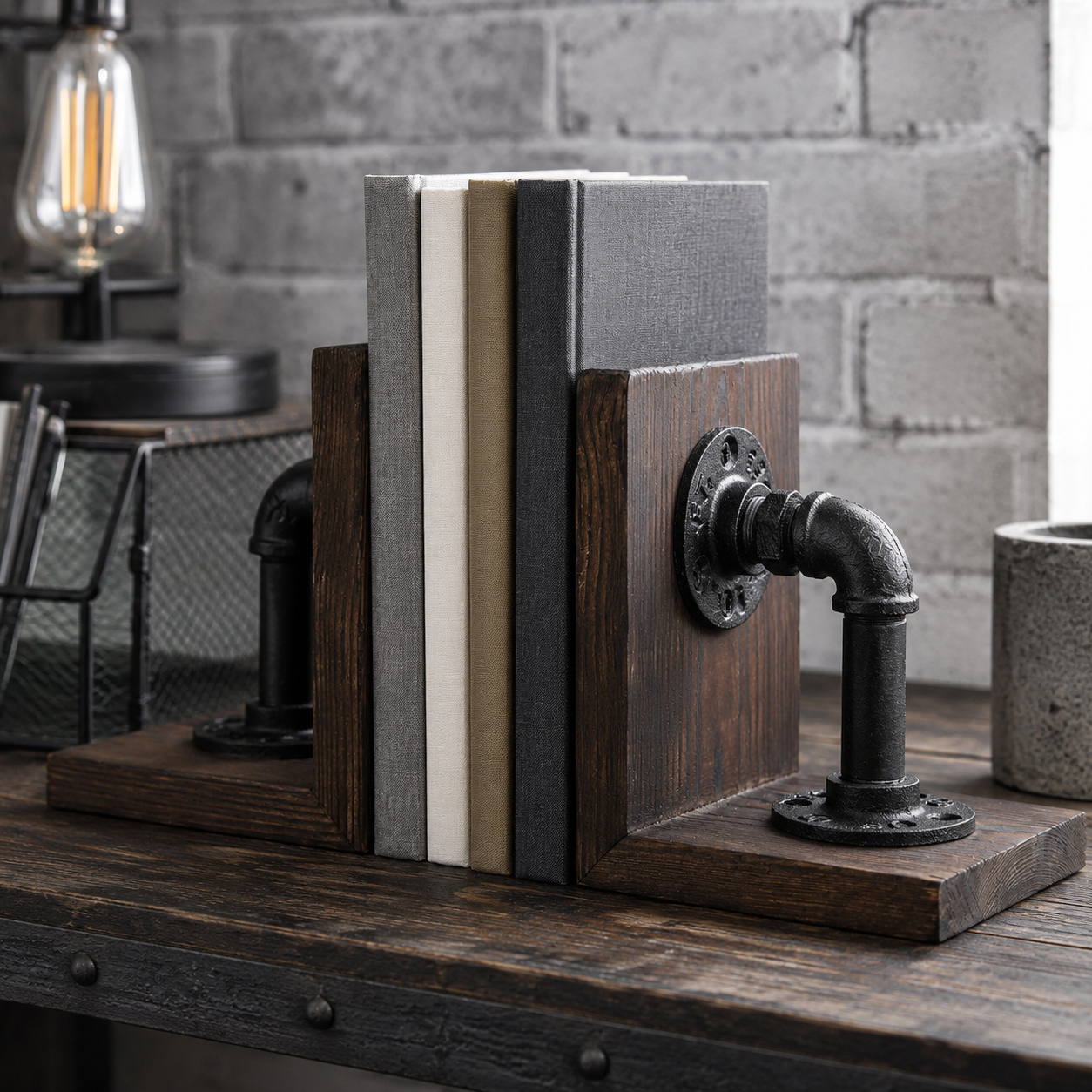
MyGift Industrial Wood & Metal Bookends
The accent that adds visual weight and the wood-meets-metal contrast in miniature. These rustic bookends combine brown wood with black metal — the exact material pairing the whole aesthetic is built on, scaled down to a desktop accent. Vintage accents can add character to your workspace that reproductions struggle to match, and these anchor a row of books or reference manuals on the desk or a pipe shelf. Functional decor at its most literal: they earn their place by holding your books up.
- Brown wood paired with black metal
- Heavy enough to hold a real row of books
- Rustic-industrial styling for desk or shelf
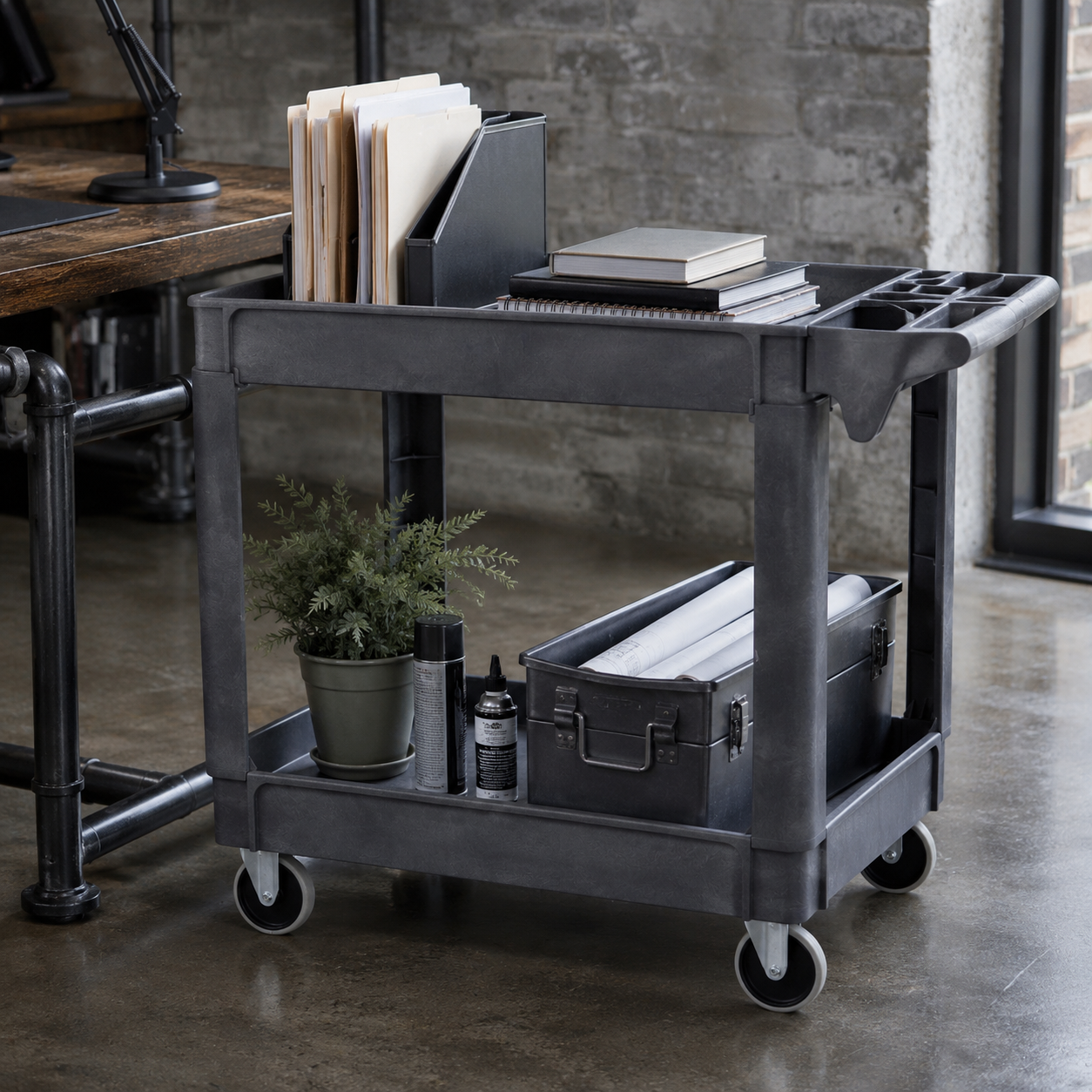
WEN Extra-Wide Metal Service Utility Cart
The hardest-working piece in the lineup. A genuine metal service cart with a 500-pound capacity and visible casters — this is real workshop equipment, not a decorative reproduction, which is exactly why it nails the industrial aesthetic. Roll it beside the desk for files, books, equipment, and supplies, then move it wherever the work goes. Use the tiers for weathered-metal storage that stays on-brand. It's the most utilitarian item here and arguably the most authentically industrial — built for function, period.
- 500-pound capacity, genuine steel construction
- Extra-wide 46 x 25.5-inch tiers with casters
- Real workshop equipment, fully mobile
Four ways industrial desks go wrong
Most industrial attempts that don't land are failing on these four predictable mistakes. Catch them and the setup straightens itself out.
- 01
Letting it go cold and sterile
The most common industrial failure is all steel and concrete with no warmth at all — a workspace that looks like a server room rather than somewhere you want to spend your day. The fix is small, deliberate notes of warmth: an Edison bulb's amber glow, a reclaimed-wood surface, a desk pad on cold steel, a single architectural plant. Incorporating plants creates a more inviting workspace, and foliage balances the industrial aesthetic. Just enough warmth to invite — not so much that the industrial honesty disappears.
- 02
Tipping into theatrical steampunk
The opposite failure: piling on so many gears, gauges, exposed bulbs, and pipe fittings that the desk becomes a costume rather than a workspace. Industrial is restrained — the exposed structure should be the actual structure, not decorative gears bolted on for show. If a fitting isn't doing a job, it probably shouldn't be there. Functional decor should be emphasized; honest function is the line between industrial and steampunk cosplay.
- 03
Faking the materials
Laminate printed to look like reclaimed wood, plastic molded to look like steel, a lightweight frame painted to mimic iron — these read as fake the moment you touch them, and often the moment you see them. Raw materials include solid wood tabletops paired with steel or pipe-style legs, and the honesty of those materials is the entire aesthetic. You don't need a $6,000 reclaimed slab to start, but choose real wood and real metal over convincing imitations wherever the budget allows.
- 04
Forgetting cable management
An industrial desk celebrates intentional exposed structure — the bolt, the bracket, the pipe. Tangled cables are the unintentional kind, and they undermine the whole look instantly. Clean hidden wires are essential for maintaining an industrial aesthetic without visual clutter. Route cables through or behind the steel frame, use the cart or shelves to hide power strips, and keep the only visible structure the structure you actually want seen. The discipline of showing the right things and hiding the wrong ones is what separates a designed industrial desk from a messy one.
Industrial desk questions, answered
What is an industrial desk setup?
An industrial desk setup features raw rugged materials and sleek functionality, built from steel frames, reclaimed wood, concrete, and exposed hardware. It draws from early-twentieth-century factory and warehouse furniture, where form followed function and pieces were built to last decades. The defining qualities are a minimal palette of neutrals like black and dark grey, honest materials shown as they are, and a celebration of exposed structure — visible bolts, pipe fittings, and brackets treated as design features rather than hidden away.
What materials define an industrial desk?
Raw materials include solid wood tabletops paired with steel or pipe-style legs — reclaimed timber, blackened steel, raw iron, and concrete are the core. Industrial desks often combine metal and wood materials, with the warmth of aged wood contrasting against cold steel. Concrete adds striking visual contrast and exceptional durability. The key is authenticity: honest finishes and real materials rather than laminate printed to look like wood or plastic molded to look like metal.
How do I keep an industrial desk from feeling cold?
Add small, deliberate notes of warmth without breaking the cool palette. Warm lighting such as Edison bulbs enhances the vintage glow of industrial setups beautifully. A desk pad adds warmth and organization to cold steel surfaces. Incorporating plants creates a more inviting workspace, and foliage balances the industrial aesthetic — a single architectural succulent or snake plant softens the hard edges. Reclaimed wood surfaces also bring natural warmth against the steel. The skill is restraint: enough to invite, not so much that the industrial honesty disappears.
How much does an industrial desk setup cost?
It spans a wide range. A DIY reclaimed-wood-and-steel build can start under $1,000, while handmade or vintage factory pieces climb to $6,000 or more. On the accessible end, a steel-frame desk with a wood-grain top runs $60-90, and the supporting gear — Edison lamp, mesh organizer, pipe shelves, bookends — totals well under $150. The biggest single item is usually a quality metal utility cart at around $130. The key trade-off: higher upfront cost on quality materials means lower cost per year over a desk's 15-20 year life.
What lighting works best for an industrial desk?
Exposed Edison-bulb fixtures are the signature — their warm amber filament glows against cool steel and concrete, providing the one deliberate note of warmth in a cool palette. Layer in natural light where possible, since natural light improves desk aesthetics and productivity while poor lighting causes eyestrain and headaches. Adjustable desk lamps target specific work areas, ambient lighting enhances the visual character of the space, and a screen bar lamp reduces glare from monitors during long sessions. Avoid neon and cool-white LED in favor of warm tones that maintain the moody atmosphere.
Can an industrial desk work in a small space?
Yes — the modern minimalist industrial approach strips the style to slim steel profiles and clean lines that fit compact rooms. Choose a smaller steel-frame desk rather than a heavy reclaimed slab, optimize vertical space with wall-mounted pipe shelves using iron brackets, and keep storage utilitarian with a rolling cart that moves out of the way. Consider ceiling height for overhead storage and lighting. Clean cable management matters even more in a small space, where visual clutter shows quickly — route wires through the frame to keep the look intentional.
The best new setups, in your inbox
One thoughtful email. No spam, no fluff.