
Vintage desk setup ideas
Six elements that build a cozy, old-soul workspace from real wood, real brass, and pieces collected over years — without turning the desk into a museum.
Vintage is the most forgiving aesthetic on this site. Where minimalist demands restraint and dark academia demands specific brown tones, vintage opens a much wider door — anything from a 1920s Art Deco lamp to a 1970s teak credenza fits the framework, as long as the pieces feel real, used, and chosen rather than ordered all at once. Antique desks were typically made from mahogany, oak, or walnut, but vintage in 2026 can mean almost any solid-wood desk made between 1920 and 1980, plus the lamps, accessories, and decor that fit alongside them.
Over 7,000 people search for vintage desk setup ideas every month, and the reason becomes obvious the first time you trade a flat-pack laminate desk for something made of solid wood with original hardware. The weight under your hands changes. The slight imperfections in the grain change the room. The desk goes from being a surface you sit at to being a workspace with history.
In 2018 my home office was IKEA-white laminate, chrome legs, a monitor on a plastic riser. It worked fine. But the day I picked up a $60 oak writing desk from an estate sale, the entire room changed. The weight of real wood under my hands made me want to stay and work instead of flee to the couch.
This guide covers the six elements that consistently build a vintage desk worth sitting at, the five principles that keep an old-soul workspace from sliding into theatrical museum-set territory, the gear worth buying new, and the mistakes that quietly ruin the aesthetic even when the desk itself is right. Most of what you'll need can be sourced through patience: estate sales, Facebook Marketplace, antique malls, and the occasional well-chosen new purchase that completes the layering.
What actually makes a desk vintage
The six elements below look different individually, but they work because they share these five underlying rules. Skip one and the whole composition slides toward either “costume vintage” (theatrical, museum-staged) or “just an old desk” (no editorial cohesion) — both adjacent to vintage, but neither it.
- 01
Real materials over period accuracy
A 1950s desk made of solid oak beats a 1920s reproduction made of veneer every time. Vintage isn't about matching a specific era — it's about choosing pieces made from materials that age into beauty rather than out of it. Solid wood, real brass, genuine leather, ceramic, glass. Plastic and laminate are the disqualifiers. The pieces that survive decades do so because they're made of things that improve with use.
- 02
Mix eras deliberately
The vintage desks that look most intentional combine pieces from multiple decades — a 1940s typewriter table, a 1960s ceramic lamp, a 1920s brass letter opener. A vintage desk can be a mid-century modern piece or a classic oak desk; the era mix can actually feel more unique than a purist approach. The discipline is consistency of material quality, not chronological purity. A piece looks like it belongs because it shares the same craft tradition, not because it shares the same decade.
- 03
Patina is the point
Worn brass, slightly cracked leather, scratched wood surfaces, ink-stained blotter pads — these aren't damage. They're evidence that the object has been used by humans for decades. A vintage desk where everything looks brand new isn't vintage; it's a stage set. Authentic retro elements can elevate desk aesthetics dramatically. Buy pieces with character built in; let new pieces develop their own over the years to come.
- 04
Function still matters more than aesthetic
Many vintage desks were built before computers existed, which means the depth, height, and cable routing can all be wrong for modern work. Many antique desks were originally designed for writing on scrolls and manuscripts — a beautiful 18-inch-deep secretary desk you can't fit a monitor on isn't useful, no matter how authentic the wood. The discipline is choosing pieces that work for your actual life, not just photograph well. Function survives; theater doesn't.
- 05
The desk grows over years, not weekends
The vintage desks that look most authentic online have been built piece by piece over time — one estate sale find, one Marketplace pickup, one DIY restoration. Vintage built in a single shopping trip looks staged; vintage built over years looks lived-in. Start with the desk itself. Add one piece a month. Browse local listings consistently. The patience is the aesthetic, not just the method of building it.
Six elements that build a vintage desk
Each element contributes a specific quality to the aesthetic. Layer four of them and you've got vintage. Layer all six and the corner becomes the kind of old-soul workspace that makes a Tuesday morning feel like Saturday at an antique mall.
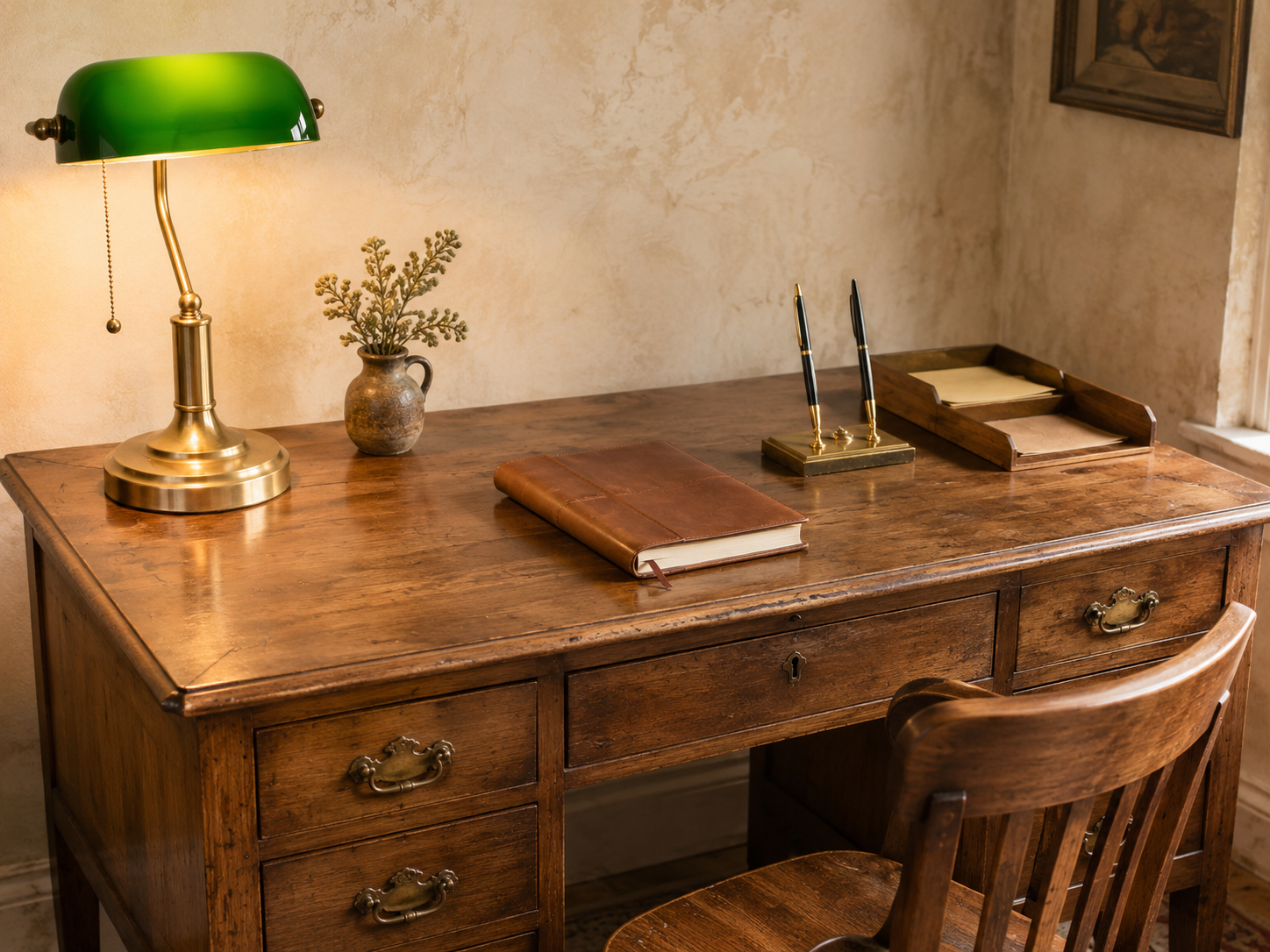
The Vintage Desk Centerpiece
Antique desks are typically made from mahogany, oak, or walnut — rich natural wood tones that anchor a warm color palette naturally. The desk itself is the single most important decision; everything else builds around it. Antique desks include styles like roll tops, fold-downs, secretaries, partners desks, mid-century writing tables, and small French or English writing tables. Each style suits a different workflow: a roll-top closes to hide a workspace, a partners desk shares with another person, a secretary fold-down compresses to fit a small apartment. Vintage desks often feature multiple compartments for storage, and desks from the 19th century often include hidden compartments — features rarely found in modern minimalist furniture.
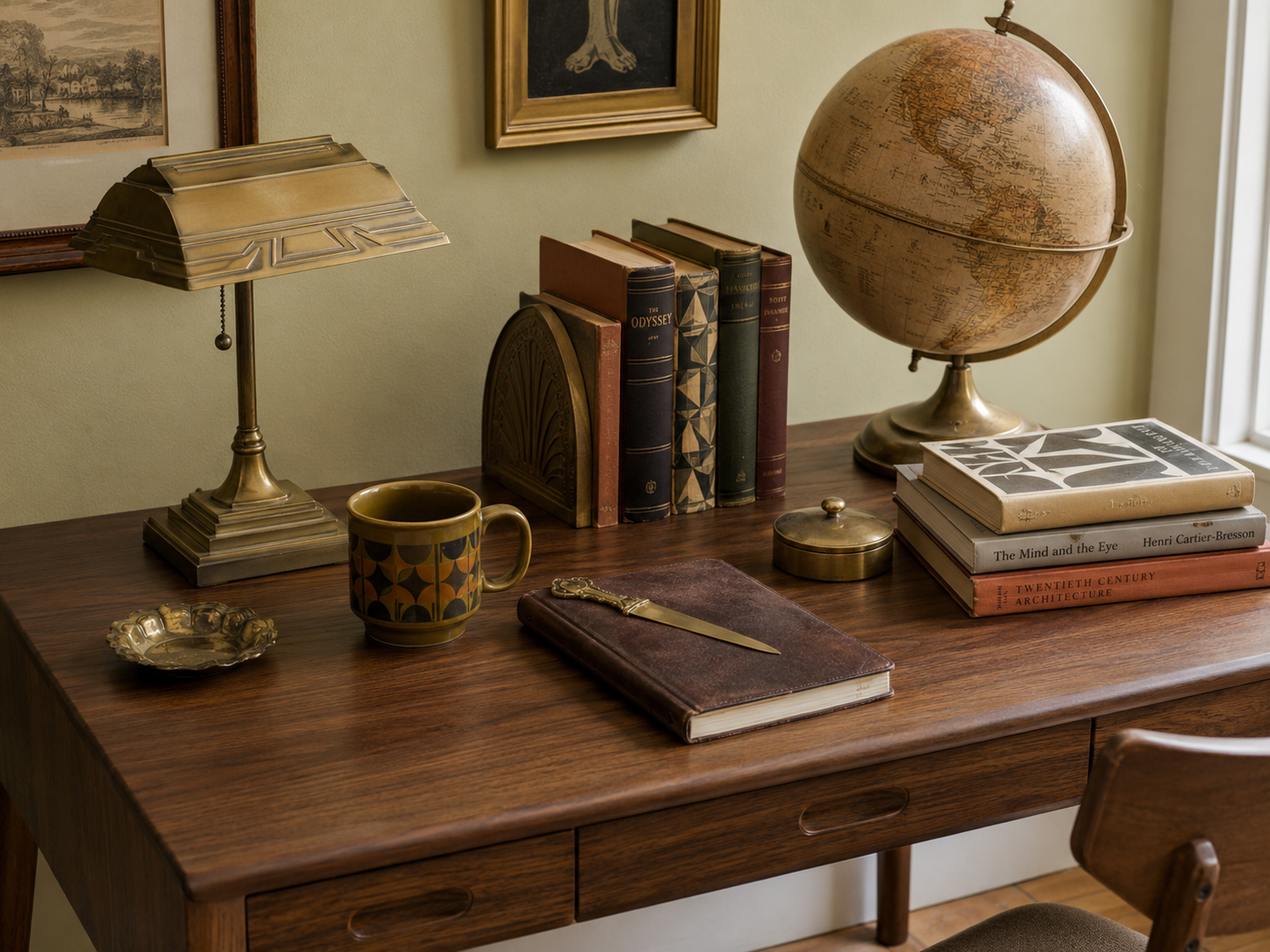
Mixed-Era Curation
Vintage's signature move is combining pieces from different decades that share the same craft tradition. A 1930s Art Deco lamp on a 1960s mid-century desk works because both pieces value real materials and considered design. A vintage desk can be a mid-century modern piece or a classic oak desk — the era mix can actually feel more unique than a purist approach. The discipline is consistency of material quality (solid wood, real brass, genuine leather) across decades, not chronological purity. French 19th-century desks often feature intricate marquetry designs and they sit beautifully alongside simpler mid-century pieces, because both honor the same craft principle: real materials, handmade detail, considered design.
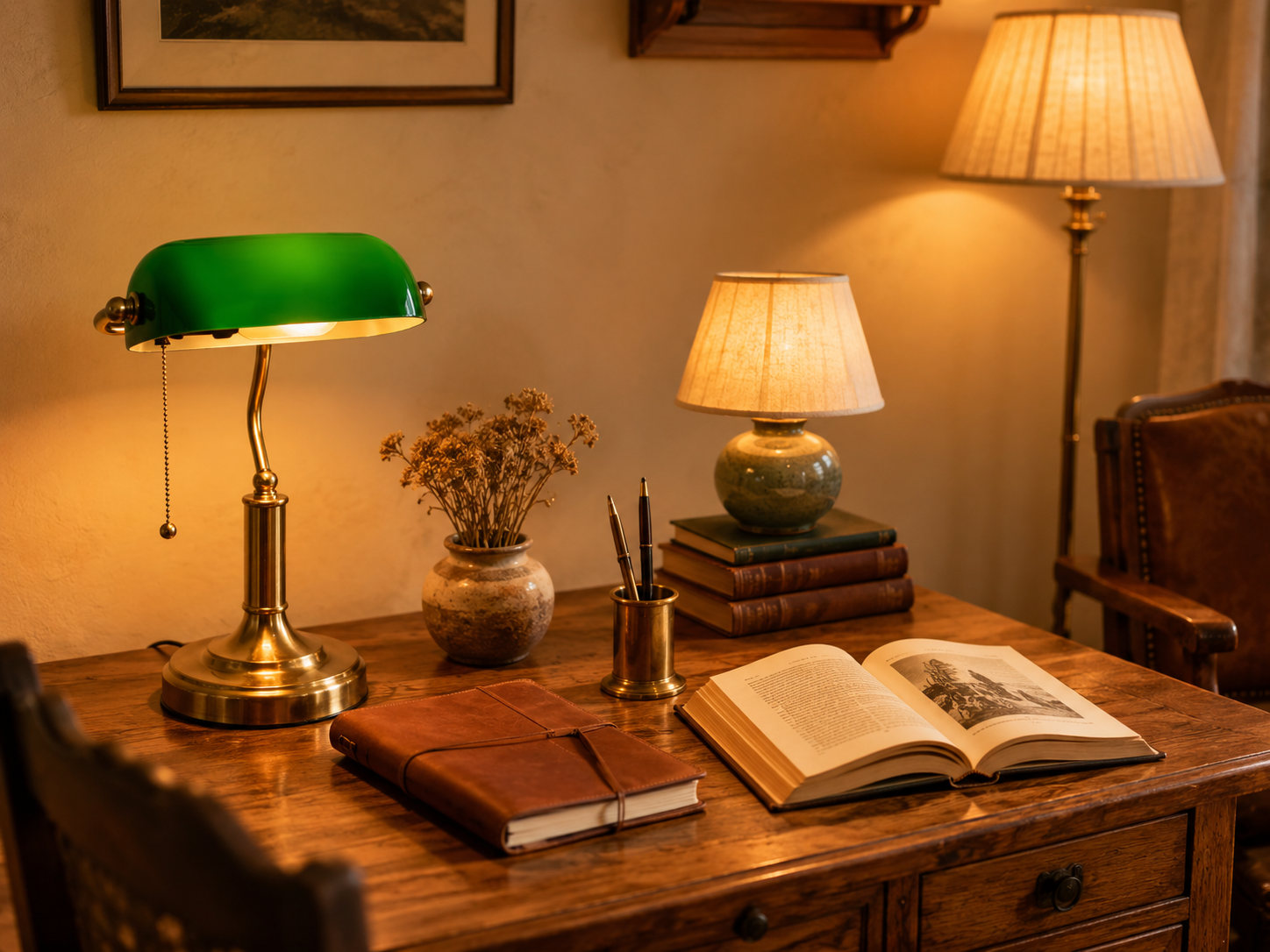
Period-Appropriate Lighting
The lighting era should reinforce the desk era. A brass banker's lamp suits Victorian or Edwardian desks; an Art Deco fixture from the 1930s-1950s suits early-mid century pieces; a ceramic mid-century lamp suits 1960s-1970s desks. Warm color temperature lighting can reduce eye strain and keeps everything feeling golden — use bulbs at 2700-3000K with the period-appropriate fixture style. Layered lighting matters most: a desk lamp plus an ambient source (floor lamp, sconce, or table lamp on a nearby shelf) produces the warm low glow that defines a vintage workspace and avoids the office-bright look that breaks the era.
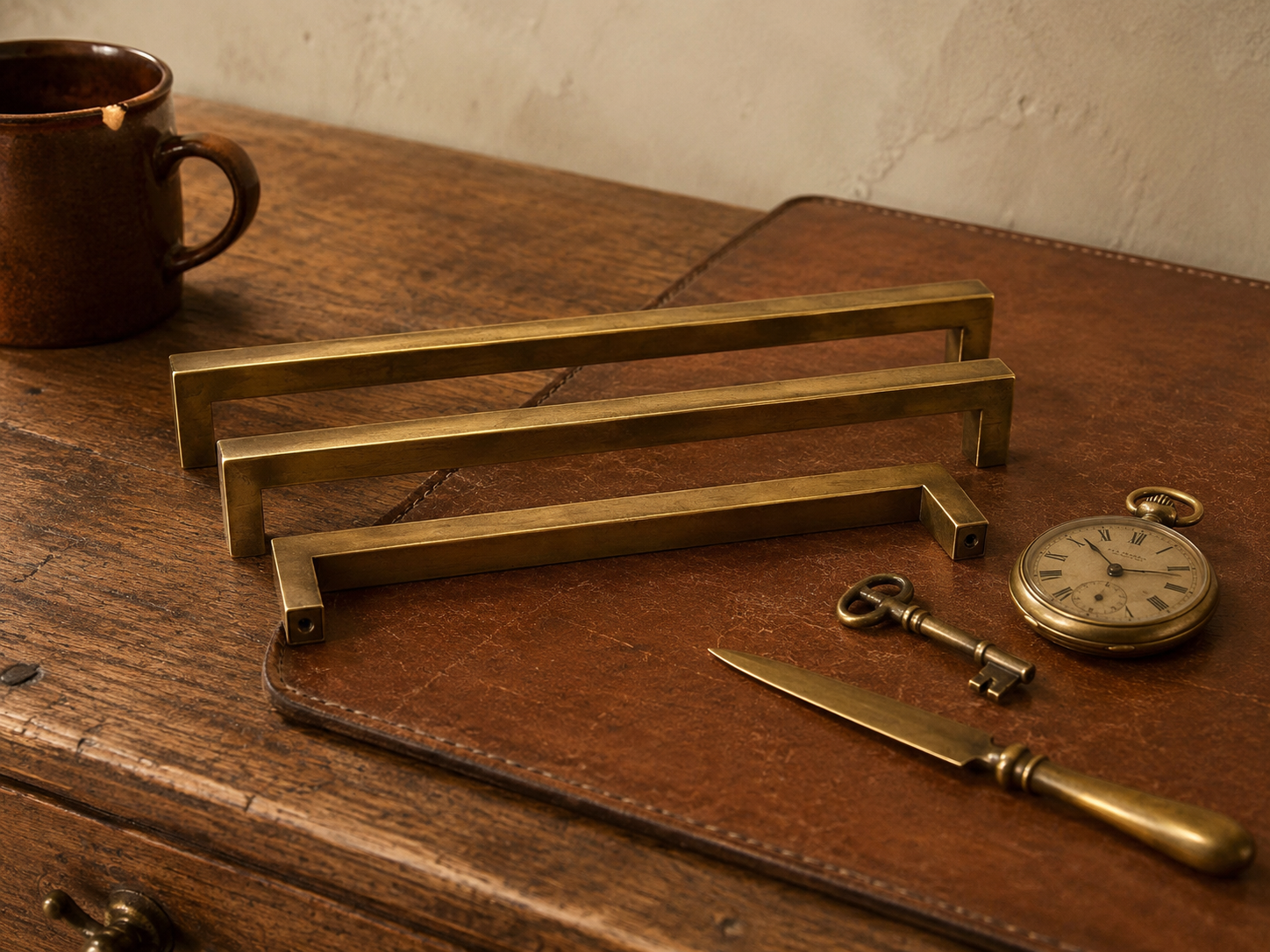
Patina & Aged Materials
Authentic retro elements can elevate desk aesthetics dramatically. The materials that earn their place on a vintage desk all share one quality: they age into beauty rather than out of it. Brass develops patina; leather softens with use; wood deepens in color; ceramic chips into character. Rich natural wood tones like walnut or oak anchor a warm color palette, and brass or matte black accents can maintain a cohesive retro feel across decades-mixed pieces. The opposite is also true: avoid anything that loses value with age (most plastics, glossy paints that chip badly, chrome that scratches obviously). Buy materials that look better in five years than they do today.
Wall Galleries & Curiosities
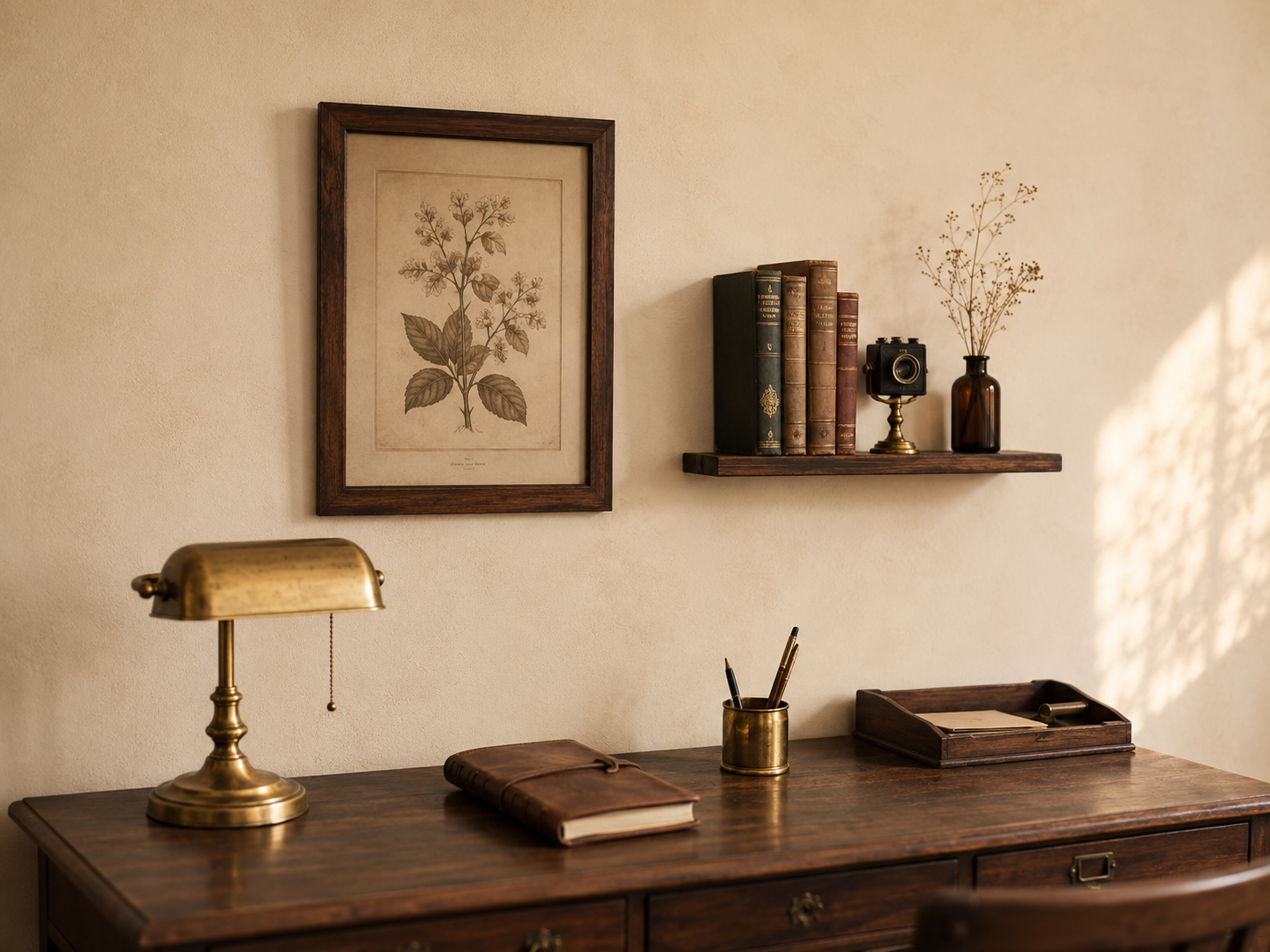
The wall above the desk extends the vintage zone upward and outward. A single framed map, black-and-white photograph, or botanical print from the early 1900s style is enough — keeping at least 30-40% of the wall as negative space ensures the desk remains the visual anchor rather than getting lost in clutter. A small wall-mounted shelf or picture ledge holds three or four old books, a tiny bust, a vintage camera, or a small statue. Statement pieces like a vintage typewriter can serve as focal points on a nearby shelf or surface. The discipline is curation; not every found object earns wall space.
Modern Tech, Softened
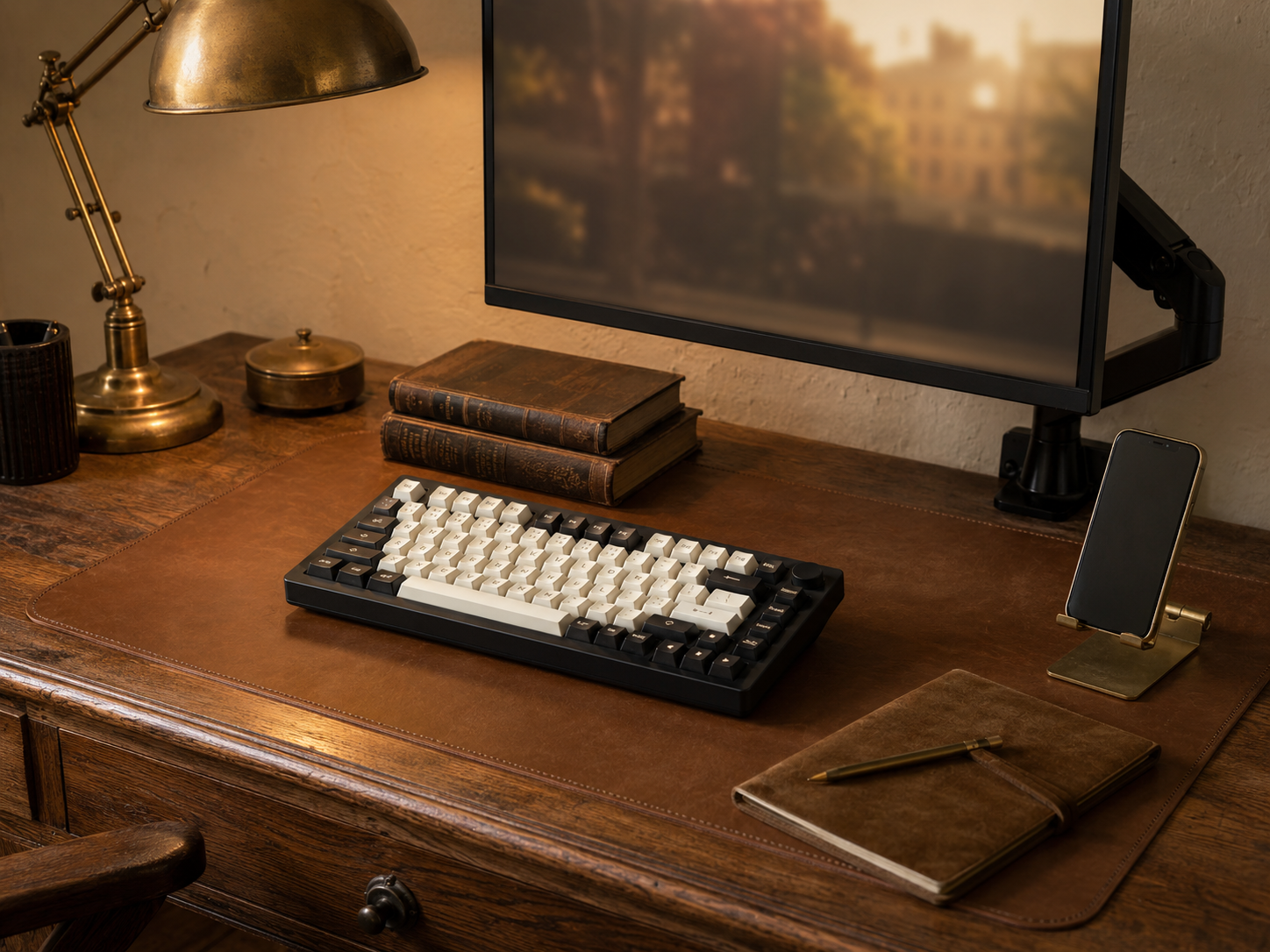
Most vintage desks now host laptops, monitors, and microphones — pretending otherwise is futile. Sleek monitor arms can help conceal modern technology by clamping to the back of a vintage desk so the screen floats and the leather or wood top stays mostly clear. A pull-out keyboard tray creates a comfortable typing height when the desk surface itself is too high or too low for extended typing. Choose tech colors that suit the desk: black or dark gray monitors for dark mahogany desks, silver or white accessories for light birch or pine desks. Antique brass grommets can be added for wire management without permanent damage to the surface. Mechanical keyboards with retro keycaps can enhance workflow while looking period-appropriate. The discipline is softening the modern, not hiding it entirely.
Six pieces of gear that build a vintage desk
Most of vintage is best sourced through estate sales, Facebook Marketplace, or thrifting. But these six pieces are the ones worth buying new — the desk itself you may want to hunt for locally, but the accessories that complete the look earn their place at full price.
Some links in this section are affiliate links. If you buy through one of them, we may earn a small commission at no extra cost to you. We only recommend gear we'd use ourselves.
Sauder Carson Forge Vintage Computer Desk
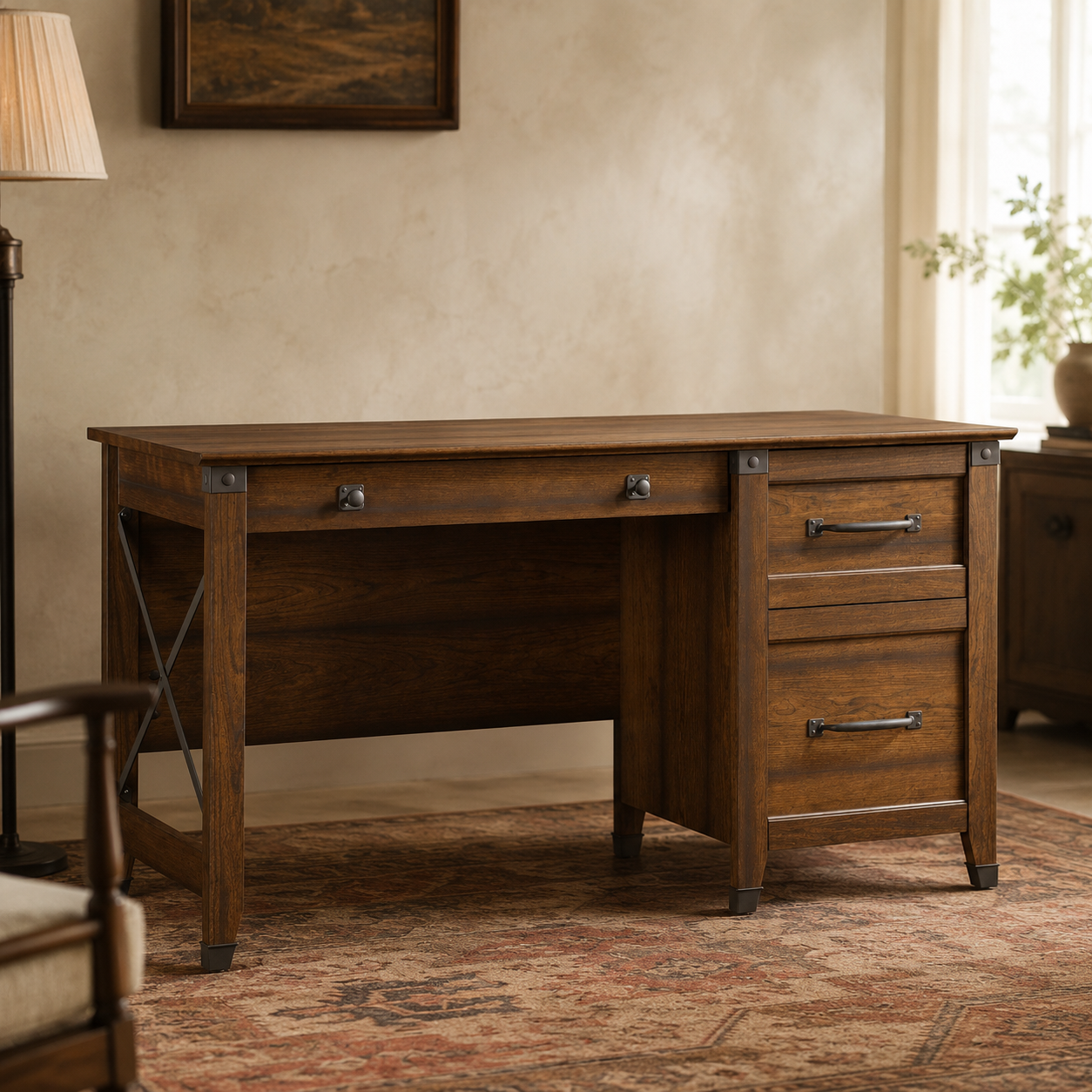
If you can't find a true vintage desk locally and need to buy new, the Sauder Carson Forge in coffee oak is the best vintage-style option at this price point. Real wood grain, traditional styling, drawer storage with shelves, and a finish that reads convincingly aged from day one. Pair with antique brass hardware swapped in immediately (Product 5 below) and the desk begins to feel vintage right away — and earns its real patina over the years that follow.
- Coffee oak finish with visible wood grain
- Drawer storage plus open shelf for files
- Tool-free assembly with patented T-lock construction
TORCHSTAR Green Glass Banker's Desk Lamp
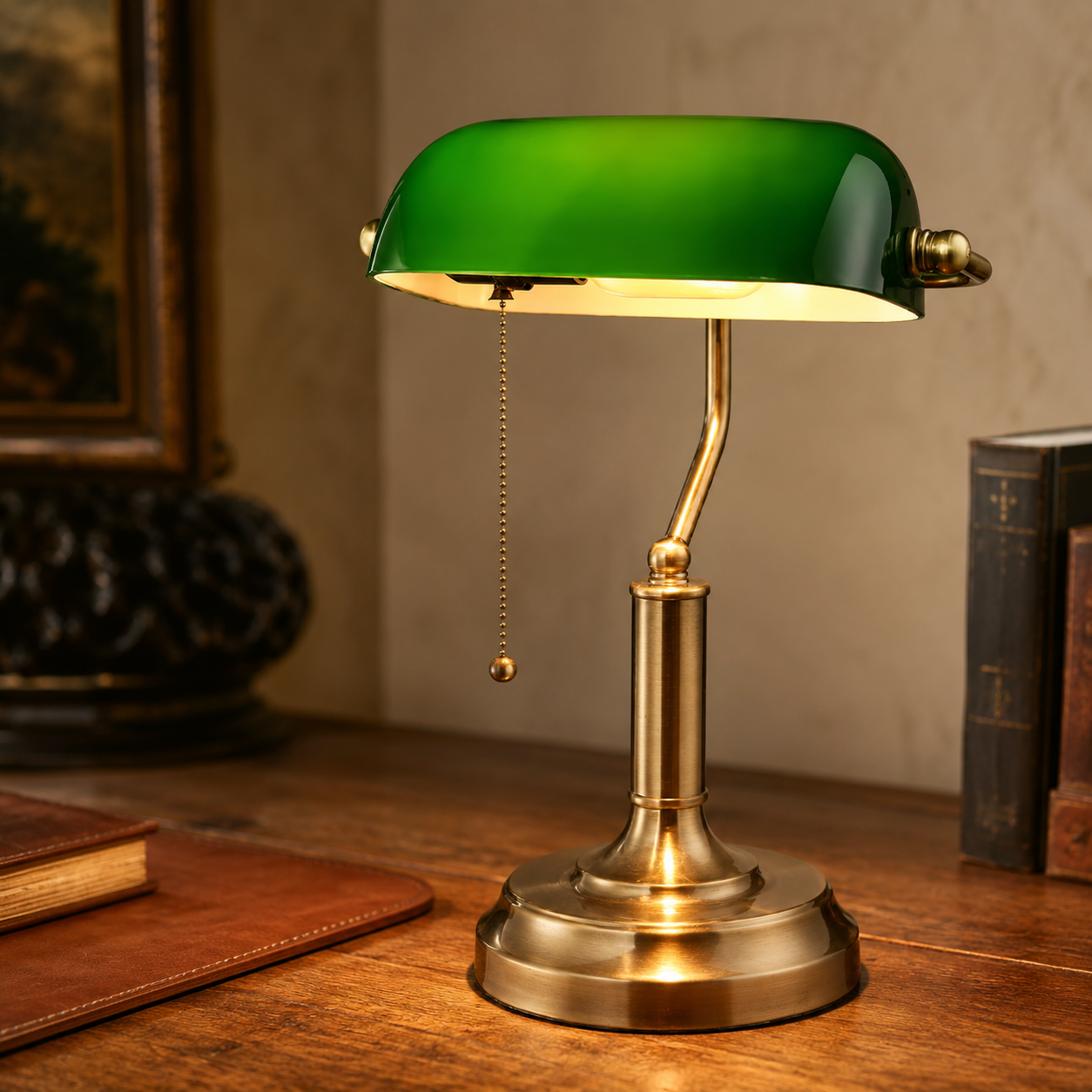
The single most reliable vintage lighting upgrade. Emerald green glass shade, antique brass body, pull-chain switch — the lamp form that says “old library” instantly and fits across the widest era range of any lighting option (Victorian through mid-century). Fitted with a warm 2700K Edison-style LED, it produces exactly the warm low glow vintage demands. Modern construction means no wiring hazards of true vintage pieces, but the look is faithful.
- Emerald green glass shade with antique brass body
- Pull-chain switch for the vintage detail
- Compatible with warm-white Edison bulbs
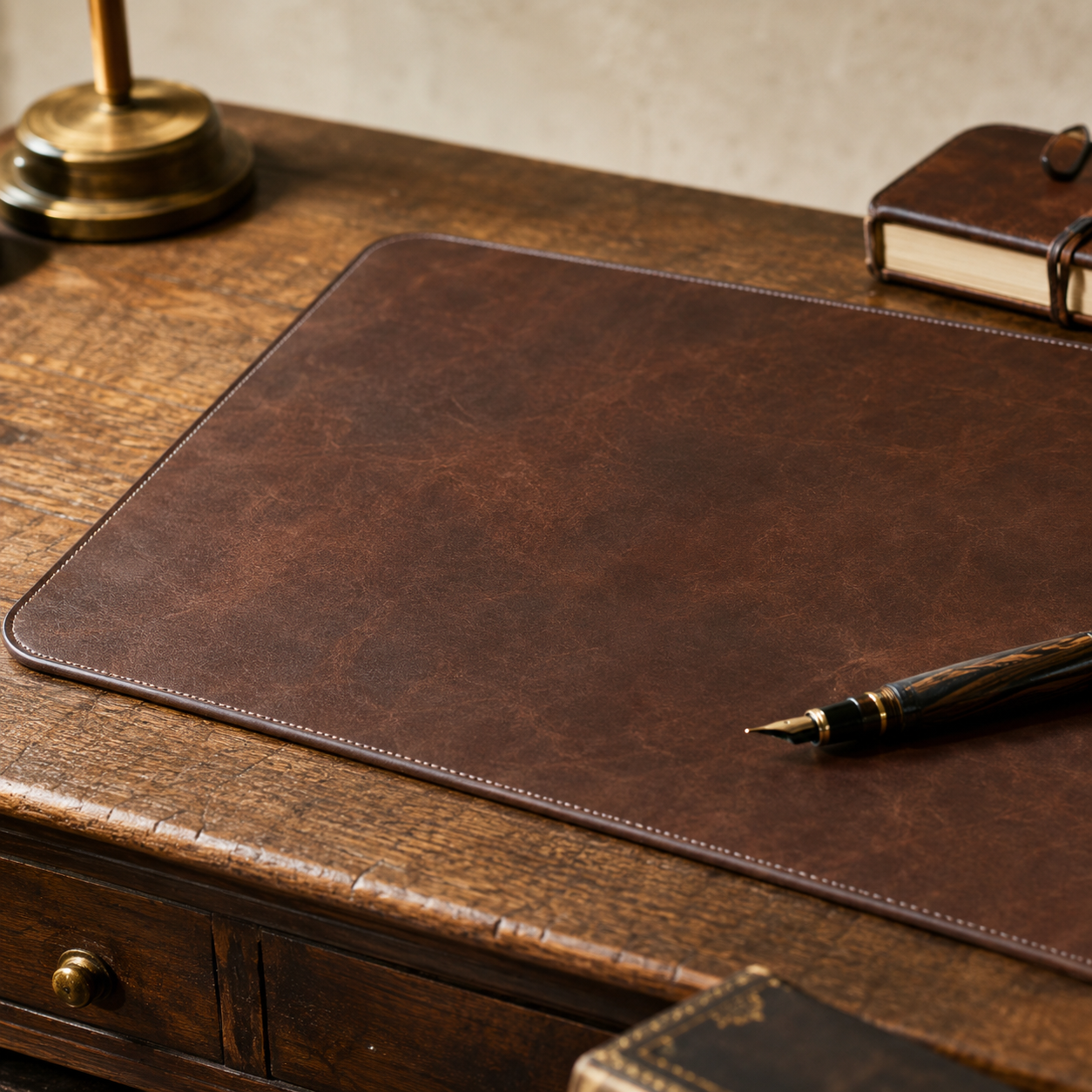
Londo Top Grain Leather Extended Desk Pad
A genuine top-grain leather desk pad in cognac, oxblood, or chocolate brown that defines the desk surface and adds the foundational leather texture every vintage setup benefits from. Real leather develops patina with use; vegan options fake it but never quite right. The pad protects an antique surface from mug rings and ink while contributing a second natural-material layer to the desk zone.
- Top-grain genuine leather, multiple color options
- Develops natural patina with daily use
- Extended size for full keyboard-and-mouse coverage
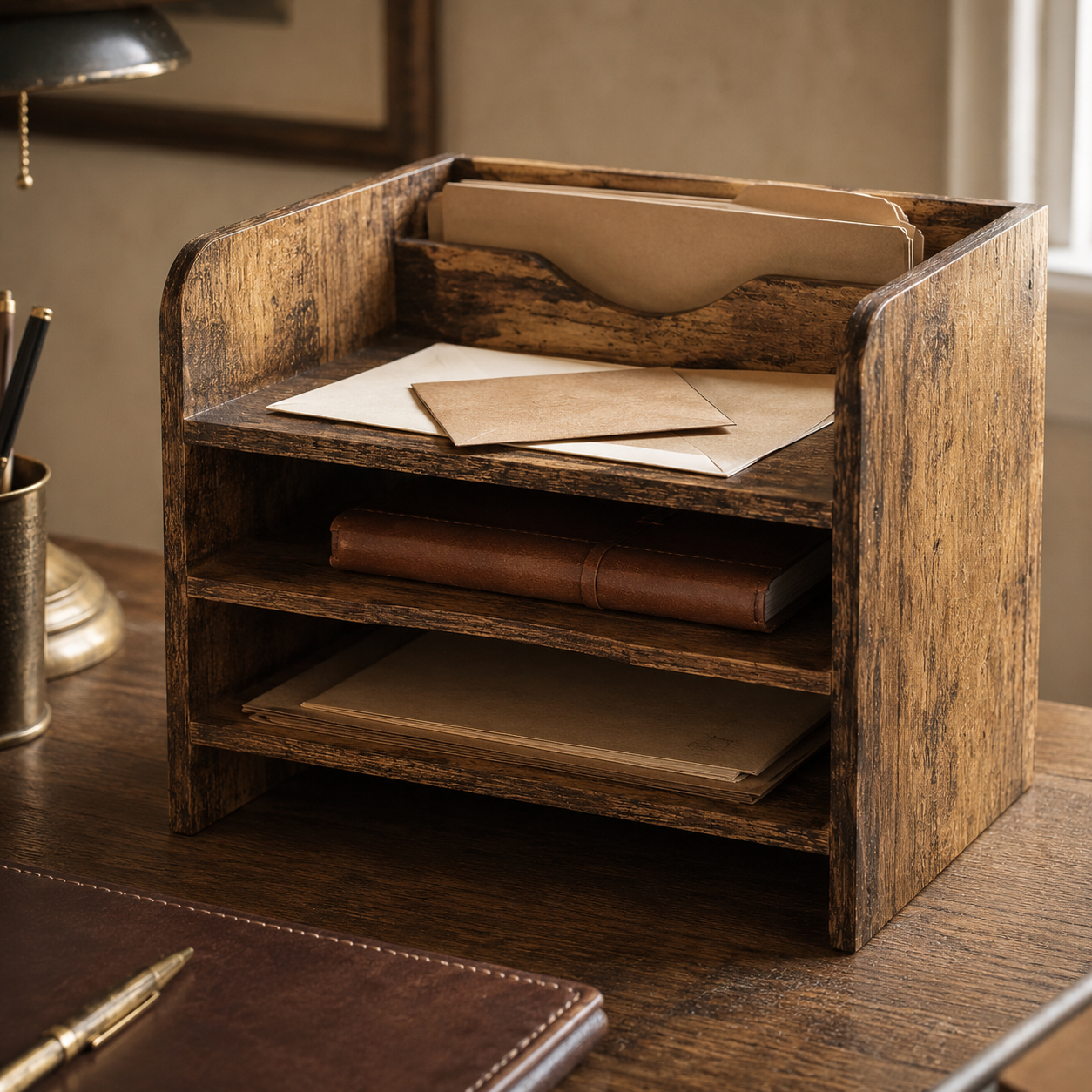
Snughome Vintage Wood File & Document Organizer
A solid wood desktop file organizer with adjustable vertical compartments — the rare desk organizer that doesn't break the aesthetic. Holds folders, notebooks, mail, and active project documents visibly upright without scattering them across the desk surface. The wood echoes the desk itself and adds another natural-material layer; modern plastic organizers break the vintage feel regardless of color. Adjustable dividers let you size compartments to whatever you actually use.
- Solid wood construction with vintage finish
- Adjustable vertical compartments for varying widths
- Holds files, notebooks, and active documents upright
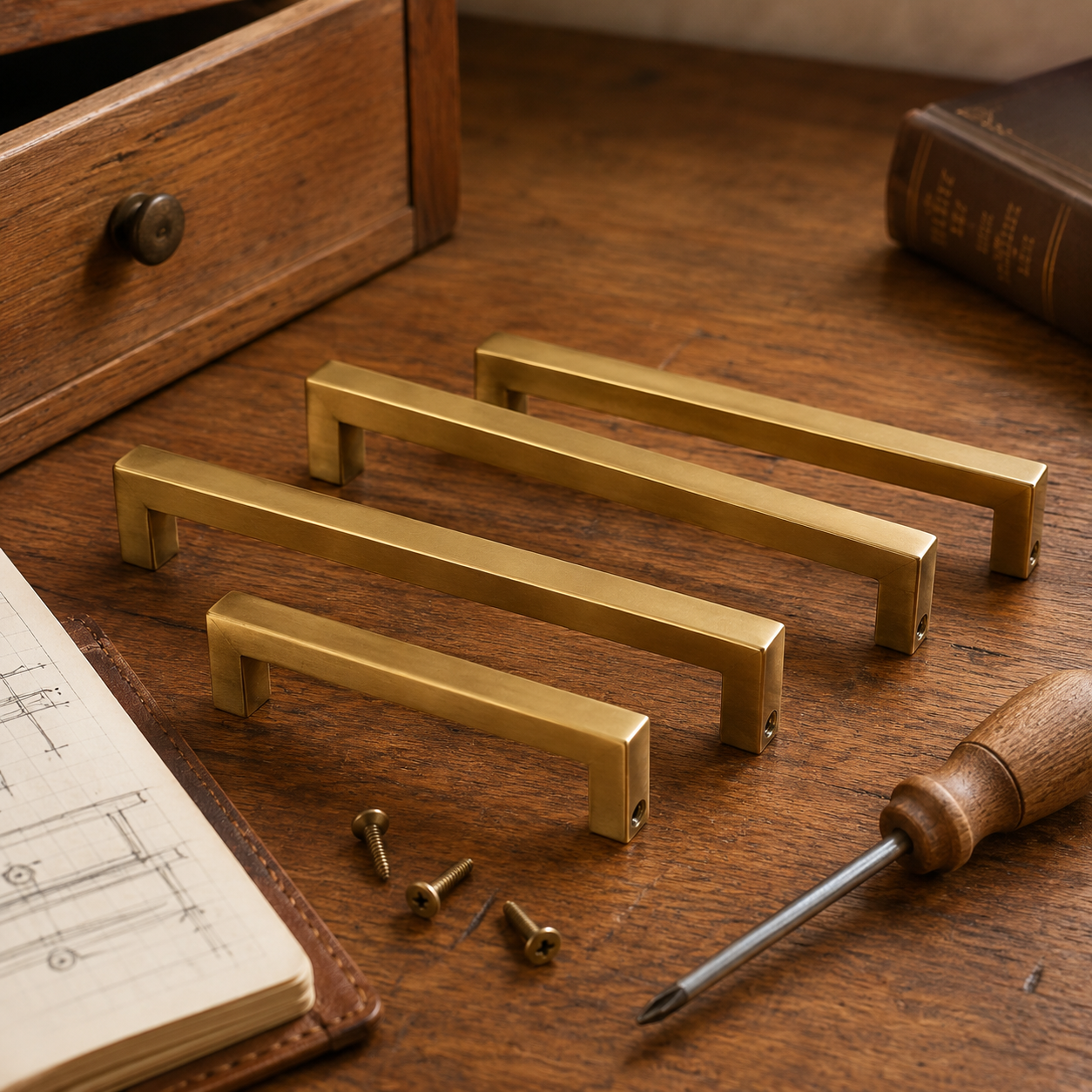
Goldenwarm Antique Brushed Brass Drawer Pulls
The single highest-impact DIY upgrade for any vintage or vintage-inspired desk: swap modern hardware for these antique brushed-brass pulls. A new desk wearing antique brass hardware reads twenty years older than the same desk with shiny modern chrome. These are full-size 10-inch cabinet handles, ideal for the wider drawer fronts on writing desks, secretaries, and credenzas — verify your drawer hole spacing before ordering and check screw sizing against your existing hardware.
- Antique brushed brass finish develops patina
- 10-inch length for wider drawer fronts
- Multiple pack sizes available (5, 10, 25 pieces)
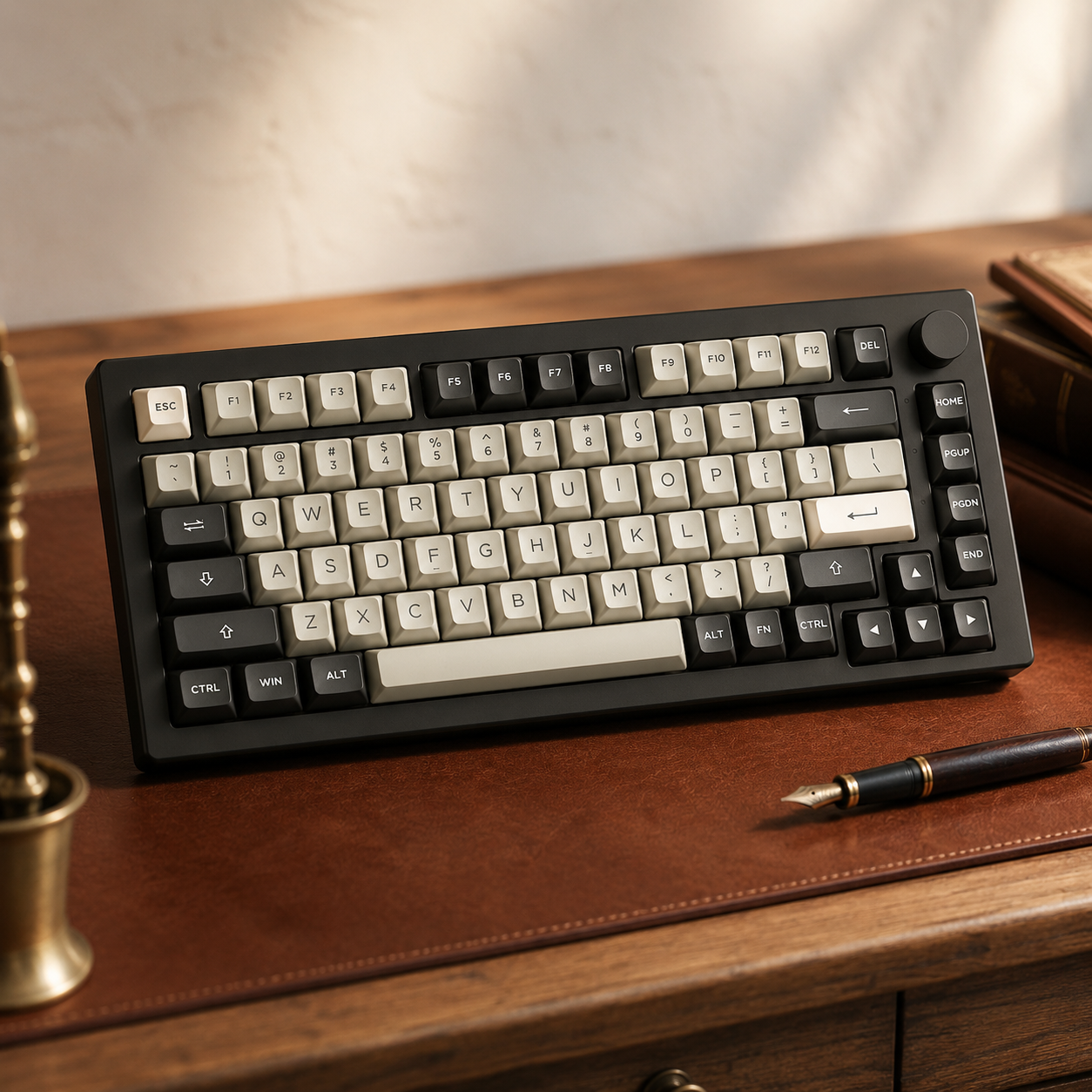
AKKO 5075B Plus Retro Mechanical Keyboard
A mechanical keyboard with retro typewriter-style keycaps in cream and dark accents — the rare modern peripheral that disappears into a vintage setup instead of fighting it. Mechanical keyboards with retro keycaps can enhance workflow while looking period-appropriate. Hot-swappable switches if you want to customize the typing feel later, wireless and wired connectivity, real build quality from an established brand. Looks like a typewriter, types like a modern mechanical.
- 75% layout with retro typewriter-style keycaps
- Hot-swappable switches, wireless and wired modes
- Multiple cream and dark colorway options
Four ways vintage desks go wrong
Most vintage attempts that don't land are failing on these four predictable mistakes. Catch them and the setup straightens itself out.
- 01
Buying for accuracy instead of cohesion
The trap is researching one specific era so heavily that you assemble a museum exhibit rather than a workspace. A perfectly accurate 1950s setup feels like a movie set if every single object is from 1950. Mix eras deliberately; consistency of material quality matters more than chronological purity. The vintage desks that age beautifully online are almost always a mix of decades held together by shared craft tradition, not shared production year.
- 02
Mistaking veneer for wood
A flat-pack “vintage-style” desk with photo-printed wood pattern doesn't develop patina — it chips, peels, and reveals particleboard underneath. The first decision when shopping any “vintage” piece is whether it's real solid wood or laminate. Real wood + dings = character. Laminate + dings = damage. The same is true for furniture: solid construction holds up; veneer-over-particleboard doesn't.
- 03
Letting modern tech dominate
A vintage desk with a huge black gaming monitor, RGB peripherals, and visible cable spaghetti reads as a modern desk with vintage props rather than a vintage workspace with modern tech. The monitor arm, dark frames, cable hiding, and warm RGB matter as much as the period accessories. The discipline is integration, not avoidance. Cozy accents like throw pillows on a nearby chair can soften the broader workspace without compromising the desk itself.
- 04
Treating it as a single shopping trip
Vintage built in one weekend looks staged. Vintage built over years looks lived-in. Start with the desk — the right one will set the tone for everything that follows. Add one piece a month. Browse listings consistently with search terms like “secretary desk,” “writing table,” “roll top,” and “antique desk” rather than just the generic “vintage desk” query. The patience is the aesthetic.
Vintage desk questions, answered
What is a vintage desk setup?
A vintage desk setup combines a real-wood desk from the 1920s-1980s era (or a quality vintage-inspired reproduction) with period-appropriate lighting, aged-material accessories, and tech softened to fit the era. A vintage desk can be a mid-century modern piece or a classic oak desk — the category spans many decades. The defining quality is that pieces feel real, used, and chosen rather than ordered all at once in one shopping trip.
How do I know if a desk is truly antique or just vintage-inspired?
Look at construction details: hand-cut dovetail joints, solid wood backs, hand-planed surfaces, and old slotted screws are signs of genuine age. A piece from before around 1920 is often called antique, while 1920s-1970s is usually vintage, and newer reproductions show machine-perfect edges and modern Phillips screws. Check for maker's marks or labels, and compare with photos on dealer websites or antique database descriptions when in doubt.
Can a vintage desk really work as my main computer workstation?
Yes — vintage and antique-style desks can serve as primary workstations for years, but pay attention to surface depth, height, and legroom. Choose desks around 22-28 inches deep if using large monitors. Sleek monitor arms can help conceal modern technology and reclaim surface space on smaller writing tables. If a desk is too narrow for your full setup, it can still be ideal as a secondary laptop or journaling station rather than your main workstation.
What chair works best with an antique or vintage desk?
Pair a modern ergonomic chair with a vintage desk for daily comfort, then switch to a wooden chair when you want the full historic feel. Check seat height relative to desk height — aim for around 9-12 inches between seat and desktop. Simple wooden swivel chairs from the mid-20th century are a good compromise between ergonomics and period-appropriate style. Cozy accents like throw pillows or a wool throw on the chair can soften the look further without sacrificing comfort.
Is it okay to repaint an old desk, or does that ruin the value?
It depends on the piece. Rare, high-quality antique desks with original finish are best just cleaned and waxed; common or damaged desks are great candidates for paint. Painting may lower collector value but can increase personal enjoyment and suitability for a modern home office. Document any changes with photos so a future owner can understand the desk's history. Continuing to share that story matters more than preserving museum-grade originality on every piece.
Where should I start if I only have space for one small vintage desk?
Prioritize a compact writing desk or secretary with good storage so it can function as both a work surface and a mini storage hub. Many vintage desks were designed for writing on scrolls and manuscripts, which means they often include hidden compartments and clever storage that small modern desks lack. Place it near natural light, add a classic desk lamp, and keep tech minimal — a laptop plus one notebook. Even a 30-36-inch-wide vintage desk can become a powerful visual anchor in a studio apartment or bedroom corner.
The best new setups, in your inbox
One thoughtful email. No spam, no fluff.